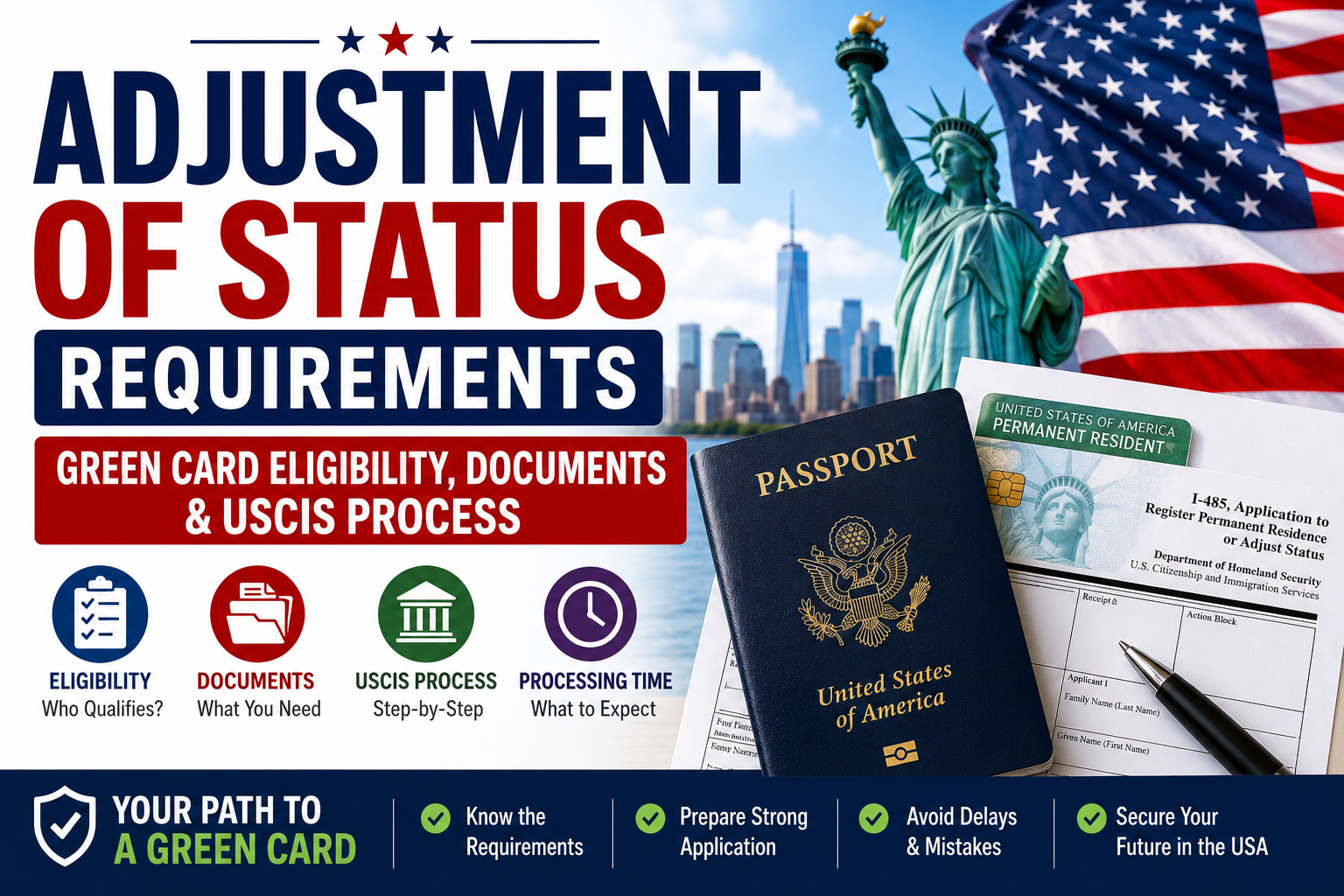
Adjustment of Status Requirements: Green Card Eligibility, Documents & USCIS Process. If you’re already in the United States and want to become a lawful permanent resident without leaving the country, Adjustment of Status (AOS) may be the right immigration pathway. Rather than applying for an immigrant visa at a U.S. embassy or consulate abroad, eligible applicants can apply for a Green Card from within the U.S. through the U.S. Citizenship and Immigration Services (USCIS).
Understanding the Adjustment of Status process is essential because filing the wrong forms, missing required documents, or applying before you are eligible can result in delays or even denial. This article explains who qualifies, the documents you’ll need, how the USCIS process works, and practical tips to help you submit a stronger application.
Suggestion: How to Immigrate to the USA: Green Card, Work Visa & Immigration Process
Suggestion: How to Get Permanent Residency: Eligibility, Requirements & Application Process
What Is Adjustment of Status?
Adjustment of Status (AOS) is the process that allows certain eligible foreign nationals already present in the United States to apply for lawful permanent resident status (a Green Card) without returning to their home country for visa processing.
Applicants must meet eligibility requirements established by U.S. immigration law, submit the appropriate USCIS forms, provide supporting documents, and successfully complete background checks and any required interviews before a decision is made.
Who Is Eligible for Adjustment of Status?
Not everyone in the United States qualifies to adjust status. Eligibility depends on several factors, including your current immigration status, the basis for your Green Card application, and whether an immigrant visa is available.
Common categories that may qualify include:
Family-Based Applicants
Many immediate relatives of U.S. citizens and certain eligible family-sponsored immigrants may apply for Adjustment of Status if they meet USCIS requirements.
Employment-Based Applicants
Workers sponsored by U.S. employers through employment-based immigrant visa categories may qualify once an immigrant visa becomes available.
Diversity Visa Lottery Winners
Selected Diversity Visa applicants who are already legally present in the United States may be eligible to adjust status if they meet all program requirements.
Special Immigrant Categories
Certain humanitarian and special immigrant programs may also provide eligibility for Adjustment of Status.
Every application is reviewed individually, and eligibility requirements vary by immigration category.
Adjustment of Status Eligibility Checklist
You may qualify if you can answer “Yes” to most of the following:
- You are physically present in the United States.
- You qualify under an eligible immigrant category.
- An immigrant visa is available for your category, when required.
- You meet the admissibility requirements under U.S. immigration law.
- You have maintained eligibility according to the applicable immigration rules.
- You are prepared to submit the required USCIS forms and supporting evidence.
Meeting these conditions does not guarantee approval, but they are common eligibility considerations.
Documents Required for Adjustment of Status
Submitting complete and accurate documentation is one of the best ways to avoid unnecessary delays.
Identity Documents
- Valid passport
- Birth certificate
- Government-issued photo identification
- Passport-style photographs
Immigration Documents
- Current visa documentation (if applicable)
- Form I-94 Arrival/Departure Record
- Previous immigration approval notices
- Copies of any employment authorization documents, if applicable
Supporting Evidence
Depending on your immigration category, you may also need:
- Marriage certificate
- Employment offer or sponsorship documents
- Affidavit of Support (when required)
- Tax documents
- Financial records
- Educational qualifications
- Police or court records if requested by USCIS
Always follow the document checklist that applies to your specific application category.
Understanding the USCIS Adjustment of Status Process
The Adjustment of Status process generally follows several key stages.
Step 1: Confirm Eligibility
Review the eligibility requirements for your immigration category before filing your application.
Step 2: Prepare Your Forms
Many applicants file Form I-485 (Application to Register Permanent Residence or Adjust Status) along with any additional forms required for their case.
Step 3: Gather Supporting Documents
Organize all required documents before submission. Missing evidence is a common cause of delays.
Step 4: Submit Your Application
Send your completed application package to USCIS according to the filing instructions for your eligibility category.
Step 5: Attend Biometrics Appointment
USCIS may schedule a biometrics appointment to collect fingerprints, photographs, and a signature for background checks.
Step 6: Respond to Requests for Evidence (If Any)
If USCIS requires additional documentation, respond promptly and provide complete information by the deadline.
Step 7: Attend an Interview
Some applicants are scheduled for an interview at a USCIS office, where an immigration officer reviews the application and supporting evidence.
Step 8: Receive a Decision
If approved, USCIS will issue your Green Card. If additional review is needed, USCIS will notify you of the next steps.
Common Reasons for Delays
Adjustment of Status applications may take longer than expected due to:
- Incomplete application forms
- Missing supporting documents
- Incorrect filing fees
- Background or security checks
- Requests for additional evidence
- High application volumes
- Interview scheduling delays
Submitting a complete application can help reduce avoidable delays.
Tips to Improve Your Application
Although no application can guarantee approval, these best practices can strengthen your submission.
Double-Check Every Form
Review all information carefully before signing and submitting your application.
Keep Copies of Everything
Maintain copies of every form and document submitted to USCIS for your records.
Respond Quickly to USCIS
If you receive a Request for Evidence (RFE) or interview notice, respond within the required timeframe.
Be Honest and Accurate
Providing false information or omitting important details can lead to delays, denial, or other immigration consequences.
Frequently Asked Questions
Can I work while my Adjustment of Status application is pending?
Some applicants may be eligible to apply for employment authorization while their Adjustment of Status application is being processed, depending on their circumstances.
How long does Adjustment of Status take?
Processing times vary based on the immigration category, USCIS workload, office location, and the complexity of the case. Check the official USCIS website for current processing estimates.
Do I need to leave the United States during the process?
Many eligible applicants complete the Adjustment of Status process without leaving the United States. Travel while an application is pending may have immigration consequences in some situations, so review the applicable USCIS guidance before travelling.
Is an interview always required?
Not always. USCIS determines whether an interview is required based on the type of application and individual circumstances.
Can my spouse and children apply with me?
In many immigration categories, eligible spouses and dependent children may also qualify to adjust status, subject to U.S. immigration laws and visa availability.
UEE Thoughts
Adjustment of Status provides a valuable opportunity for eligible individuals already in the United States to become lawful permanent residents without consular processing abroad. Careful preparation, accurate documentation, and understanding the USCIS requirements can make the process smoother and reduce the risk of delays.
Before submitting your application, confirm that you meet the eligibility requirements, review the latest USCIS filing instructions, and ensure every required form and supporting document is complete.
UEE Resources
- U.S. Citizenship and Immigration Services (USCIS): https://www.uscis.gov
- USCIS Adjustment of Status Information: https://www.uscis.gov/green-card/green-card-processes-and-procedures/adjustment-of-status
- U.S. Department of State – Immigrant Visas: https://travel.state.gov/content/travel/en/us-visas/immigrate.html
- U.S. Department of Justice – Executive Office for Immigration Review: https://www.justice.gov/eoir
Disclaimer: This article is for informational and educational purposes only and should not be considered legal or immigration advice. U.S. immigration laws, USCIS procedures, filing requirements, fees, and processing times may change. Always verify the latest information through official U.S. government sources or consult a qualified immigration attorney or accredited representative if you need advice about your specific situation.