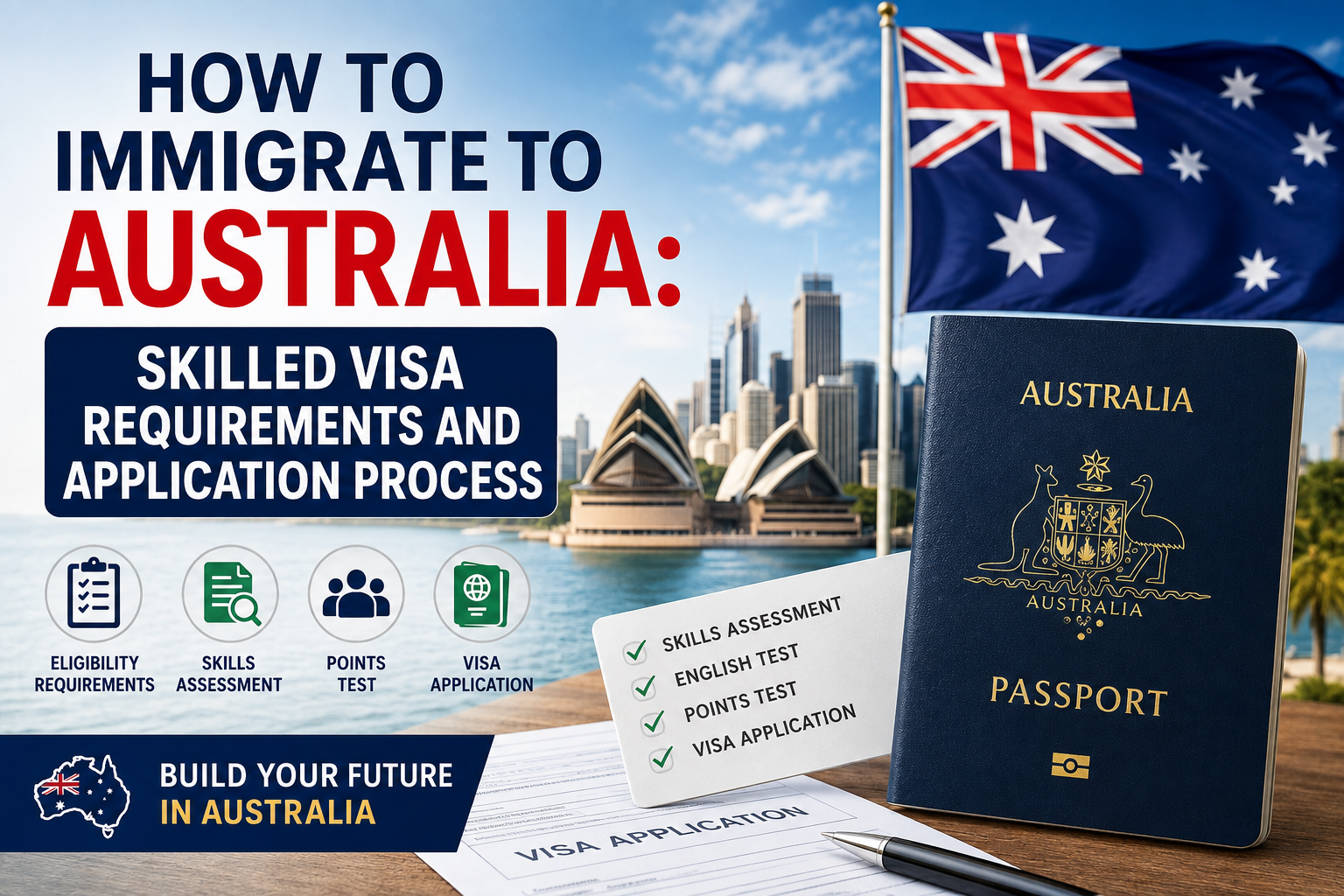
How to Immigrate to Australia: Skilled Visa Requirements and Application Process, as australia remains one of the world’s most popular destinations for skilled professionals looking for better career opportunities, higher living standards, and a stable future. Every year, thousands of engineers, healthcare workers, IT professionals, teachers, tradespeople, and other skilled workers successfully migrate through Australia’s skilled migration program. If you’re planning to move, understanding the visa requirements and application process can improve your chances of receiving an invitation to apply.
Related Articles:
- Australia Immigration: Visa Options, Eligibility and How to Apply
- Australia Work Visa Requirements: Documents, Costs and Processing Times
Whether you’re applying independently or with your family, here’s what you need to know before starting your Australian skilled migration journey.
What Is Australia’s Skilled Migration Program?
Australia’s skilled migration program is designed to attract qualified workers whose skills are needed in the Australian labor market. Unlike employer-sponsored visas, many skilled visas allow eligible applicants to apply based on their qualifications, work experience, English language ability, and points score.
Depending on your circumstances, you may qualify for permanent residency immediately or receive a pathway to permanent residence after working in Australia.
The Australian Government regularly updates eligible occupations and visa requirements, making it important to check the latest information before applying.
Popular Skilled Visa Options
Several visa pathways are available depending on your qualifications and personal circumstances.
Skilled Independent Visa (Subclass 189)
This permanent visa is intended for skilled workers who are not sponsored by an employer, state, territory, or family member. Applicants are invited based on their points score and occupation.
Skilled Nominated Visa (Subclass 190)
The Skilled Nominated Visa is for applicants nominated by an Australian state or territory government. Nomination usually adds extra points to your application and may improve your chances of receiving an invitation.
Skilled Work Regional Visa (Subclass 491)
This provisional visa is designed for people willing to live and work in designated regional areas of Australia. It can provide a pathway to permanent residency after meeting eligibility requirements.
Who Can Apply for a Skilled Visa?
Eligibility depends on the visa subclass, but most applicants should meet several core requirements.
Occupation Must Be on the Skilled Occupation List
Your profession should appear on the relevant Australian Skilled Occupation List for the visa you are applying for.
Common eligible occupations include:
- Registered nurses
- Software engineers
- Accountants
- Electricians
- Teachers
- Civil engineers
- Construction managers
- Chefs
- Plumbers
- Medical laboratory scientists
Occupation lists may change based on Australia’s workforce needs.
Meet the Age Requirement
Most skilled migration visas require applicants to be under 45 years old at the time they receive an invitation to apply.
Skills Assessment
Before applying, most applicants must obtain a positive skills assessment from the designated assessing authority responsible for their occupation.
This assessment confirms that your qualifications and work experience meet Australian standards.
English Language Requirement
Applicants usually need to prove English language ability through an approved test such as:
- IELTS
- PTE Academic
- TOEFL iBT
- Cambridge English
- OET (for eligible healthcare professions)
Higher English scores can increase your migration points.
Understanding Australia’s Points Test
Australia uses a points-based immigration system for many skilled visas.
Points are awarded for factors such as:
- Age
- English language proficiency
- Skilled employment experience
- Educational qualifications
- Australian study experience
- Partner qualifications
- State nomination
- Regional study or work experience
Generally, applicants must achieve the minimum qualifying points score before becoming eligible for an invitation, although higher scores often improve competitiveness.
Documents Needed for an Australian Skilled Visa
Preparing accurate documentation helps reduce processing delays.
Common documents include:
Identity Documents
- Valid passport
- Birth certificate
- National identity documents (if applicable)
Educational Qualifications
Provide certified copies of:
- Degree certificates
- Diplomas
- Academic transcripts
Employment Evidence
Supporting documents may include:
- Employment reference letters
- Payslips
- Employment contracts
- Tax records
- Professional licenses where applicable
English Test Results
Include valid language test results from an approved testing organization.
Skills Assessment
Upload your positive skills assessment issued by the relevant Australian assessing authority.
Police Clearance and Health Examination
Applicants are generally required to meet Australia’s character and health requirements before visa approval.
How to Apply for an Australian Skilled Visa
Following the correct process can improve your chances of success.
Step 1: Check Your Occupation
Confirm that your occupation appears on the relevant Skilled Occupation List.
Step 2: Complete Your Skills Assessment
Submit your qualifications and employment evidence to the appropriate assessing authority.
Wait until your assessment is approved before moving to the next stage.
Step 3: Take an English Language Test
Complete an approved English test if required.
Aim for a higher score to maximize your migration points.
Step 4: Submit an Expression of Interest (EOI)
Create an online Expression of Interest through Australia’s SkillSelect system.
Your EOI includes:
- Personal details
- Occupation
- Education
- Work experience
- English language results
- Points claim
Submitting an EOI does not automatically result in a visa invitation.
Step 5: Receive an Invitation to Apply
If your points score is competitive and your occupation is selected, you may receive an invitation to lodge your visa application.
Step 6: Submit Your Visa Application
After receiving an invitation, upload your supporting documents and pay the required application fee within the specified timeframe.
Step 7: Complete Health and Character Checks
You may be asked to complete:
- Medical examination
- Police certificates
- Biometrics where applicable
Step 8: Wait for a Decision
Processing times vary depending on the visa subclass, application completeness, and demand.
Common Reasons Skilled Visa Applications Are Delayed
Many applicants experience delays because of avoidable mistakes.
Some common issues include:
- Incorrect points claims
- Expired English language test results
- Missing employment evidence
- Incomplete skills assessment
- Incorrect passport information
- Unverified documents
- Delays in medical examinations
- Failure to respond promptly to immigration requests
Double-check every document before submitting your application.
Benefits of Australia’s Skilled Migration Program
Migrating through the skilled visa pathway offers several advantages.
Depending on your visa, benefits may include:
- Permanent residency opportunities
- Access to Australia’s healthcare system
- Ability to include eligible family members
- Pathway to Australian citizenship
- Freedom to work for approved employers
- High quality of life
- Strong employment opportunities
- World-class education for children
Many skilled migrants also enjoy competitive salaries and long-term career growth.
Featured Snippet: How to Immigrate to Australia Through a Skilled Visa
To immigrate to Australia through a skilled visa, check that your occupation appears on the Skilled Occupation List, obtain a positive skills assessment, meet the English language requirement, submit an Expression of Interest through SkillSelect, receive an invitation to apply, lodge your visa application, complete health and character checks, and wait for a decision from the Australian Government.
Frequently Asked Questions
What is the minimum age for an Australian skilled visa?
Most skilled visa applicants must be under 45 years old when they receive an invitation to apply.
Do I need a job offer to immigrate to Australia?
Not always. Some skilled visas, such as the Skilled Independent Visa (Subclass 189), do not require a job offer, although employer-sponsored visas do.
How many points do I need for an Australian skilled visa?
You must meet the minimum points threshold for the visa, but higher scores generally increase your chances of receiving an invitation.
Is an English language test mandatory?
Most applicants must demonstrate English proficiency through an approved test unless they qualify for an exemption.
Can my family move with me?
Yes. Many Australian skilled visas allow you to include your spouse or partner and eligible dependent children in your application.
Conclusion
Australia’s skilled migration program offers an excellent opportunity for qualified professionals seeking a new life with strong career prospects and long-term stability. By confirming your occupation is eligible, obtaining a positive skills assessment, achieving a competitive English test score, and submitting a complete Expression of Interest, you can significantly improve your chances of success. Taking the time to understand the requirements and prepare accurate documents will help make your immigration journey smoother and bring you one step closer to living and working in Australia.
FAQ Schema-Ready Questions
Q1: How do I immigrate to Australia through a skilled visa?
A: Check that your occupation is eligible, complete a skills assessment, meet the English language requirement, submit an Expression of Interest through SkillSelect, receive an invitation, and lodge your visa application.
Q2: Do I need a job offer for an Australian Skilled Independent Visa?
A: No. The Skilled Independent Visa (Subclass 189) generally does not require a job offer, but you must meet the eligibility and points requirements.
Q3: What documents are required for an Australian skilled visa?
A: Common documents include your passport, educational certificates, employment references, English test results, skills assessment, police certificates, and health examination results.
Q4: Can I apply for permanent residency through a skilled visa?
A: Yes. Some skilled visas provide permanent residency immediately, while others offer a pathway to permanent residence after meeting specific conditions.
UEE Resources
- Australian Department of Home Affairs – Skilled Visas: https://immi.homeaffairs.gov.au/visas/working-in-australia/skill-occupation-list
- SkillSelect – Expression of Interest: https://immi.homeaffairs.gov.au/visas/working-in-australia/skillselect
- Visa Finder – Australian Government: https://immi.homeaffairs.gov.au/visas/getting-a-visa/visa-finder
- Australian Department of Home Affairs – Skilled Migration: https://immi.homeaffairs.gov.au/visas/working-in-australia