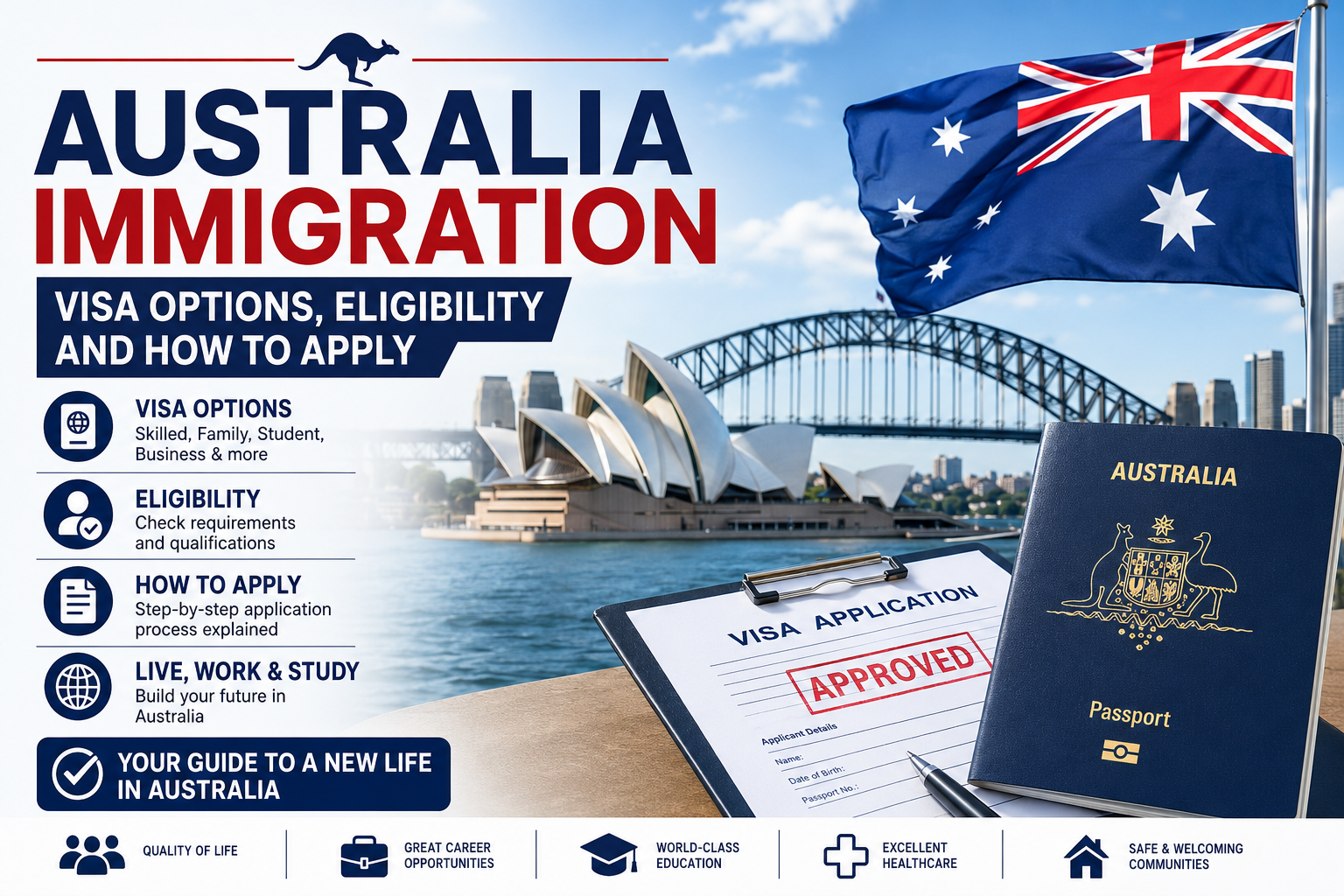
Australia Immigration: Visa Options, Eligibility and How to Apply as Australia continues to be one of the world’s most attractive destinations for skilled professionals, families, entrepreneurs, and international students. With a strong economy, high quality of life, excellent healthcare, and world-class education, it’s no surprise that thousands of people search every month for information about how to immigrate to Australia. Whether you’re planning to work, study, join family members, or settle permanently, understanding Australia’s immigration system is the first step toward achieving your goal.
Related Articles:
- Australia Skilled Worker Visa: Requirements, Points Test and How to Apply
- How to Move to Australia Permanently: Best Immigration Pathways
Australia offers several immigration pathways, each designed for different circumstances. Choosing the right visa and preparing a complete application can improve your chances of success while helping you avoid unnecessary delays.
Australia Immigration Options
Australia’s immigration program includes temporary and permanent visas that cater to skilled workers, students, families, investors, and employers.
The most common visa categories include:
- Skilled migration visas
- Employer-sponsored visas
- Family and partner visas
- Student visas
- Business and investment visas
- Visitor visas
- Permanent residency pathways
Each visa has different eligibility requirements, application procedures, and processing times.
Skilled Migration Visas
For many applicants, skilled migration is the most popular route to permanent residence.
Australia uses a points-based system to assess skilled workers based on factors such as:
- Age
- English language ability
- Education
- Skilled work experience
- Occupation
- Australian study experience (where applicable)
Applicants whose occupations appear on Australia’s skilled occupation lists may have better opportunities to qualify.
Skilled Independent Visa
This visa is designed for highly skilled individuals who do not require sponsorship from an employer or a state government.
Successful applicants can live and work anywhere in Australia permanently.
State or Territory Nominated Visa
Australian states and territories may nominate skilled workers whose occupations match local workforce shortages.
Receiving a nomination can improve your chances of receiving an invitation to apply.
Skilled Work Regional Visa
Applicants willing to live and work in regional Australia may qualify through regional migration programs that provide additional opportunities for permanent residence.
Employer-Sponsored Visas
Many Australian employers sponsor overseas workers when they cannot fill positions locally.
Employer-sponsored visas are common in industries such as:
- Healthcare
- Engineering
- Construction
- Information Technology
- Hospitality
- Agriculture
- Education
Applicants usually need a genuine job offer before applying.
Family and Partner Visas
Australian citizens and permanent residents can sponsor eligible family members.
Common family visas include:
Partner Visa
Couples who are legally married or in a genuine de facto relationship may qualify for a partner visa.
Applicants must provide evidence demonstrating the authenticity of their relationship.
Parent Visa
Eligible parents may apply to join their children who are Australian citizens or permanent residents.
Processing times vary depending on the visa subclass selected.
Child Visa
Dependent children may qualify to migrate with their parents or join eligible family members already living in Australia.
Student Visas
Australia remains one of the leading destinations for international education.
A student visa generally allows eligible applicants to:
- Study full-time
- Work limited hours while studying
- Gain Australian qualifications
- Potentially transition to other visa pathways after graduation
Students must usually receive an offer from a registered education provider before applying.
Business and Investment Visas
Entrepreneurs, investors, and business owners may qualify under Australia’s business migration programs.
These visas are designed to attract individuals who can contribute to Australia’s economy through investment, innovation, or business activities.
Requirements differ depending on the specific visa category.
Australia Immigration Eligibility Requirements
Eligibility depends on the visa you choose, but many applicants need to satisfy several common requirements.
Identity Requirements
Applicants must provide valid identification documents, including:
- Passport
- Birth certificate (where applicable)
- National identity documents
English Language Requirement
Many visas require proof of English language ability.
Accepted tests may include:
- IELTS
- PTE Academic
- TOEFL iBT (for eligible visa categories)
- Cambridge English examinations
Higher English scores can improve points for skilled migration applicants.
Health Requirements
Australia requires many visa applicants to complete health examinations conducted by approved panel physicians.
These checks help ensure applicants meet public health requirements.
Character Requirements
Applicants may need police clearance certificates from countries where they have lived.
Providing accurate information is essential throughout the immigration process.
How to Apply for an Australian Visa
Although every visa has unique requirements, the overall application process follows similar steps.
Step 1: Choose the Right Visa
Research which visa best matches your goals, whether for work, study, family reunification, or permanent migration.
Applying under the wrong visa category can result in delays or refusal.
Step 2: Check Eligibility
Review all eligibility requirements carefully.
For skilled migration, this may include checking whether your occupation appears on Australia’s skilled occupation list and whether you meet the required points score.
Step 3: Gather Supporting Documents
Prepare all required documents before submitting your application.
These may include:
- Passport
- Educational qualifications
- Employment references
- English language test results
- Police certificates
- Medical examination results
- Financial documents where required
Providing complete documentation helps reduce processing delays.
Step 4: Submit Your Online Application
Most Australian visa applications are submitted electronically through the Department of Home Affairs.
Ensure every answer is accurate and supported by evidence.
Step 5: Complete Biometrics or Health Checks
Depending on your nationality and visa category, you may be asked to provide biometric information or complete additional medical examinations.
Step 6: Wait for a Decision
Processing times vary according to visa type, application volume, and individual circumstances.
Applicants should monitor their online account for updates and requests for additional information.
Common Reasons Australian Visa Applications Are Refused
Many refusals occur because applicants overlook important details.
Common reasons include:
- Incomplete applications
- Missing supporting documents
- Incorrect information
- Failure to satisfy health or character requirements
- Insufficient English language evidence
- Not meeting visa-specific eligibility rules
Double-checking your application before submission can reduce these risks.
Benefits of Immigrating to Australia
Australia offers many advantages for newcomers.
These include:
- Strong employment opportunities
- High average quality of life
- Excellent public healthcare system
- Internationally recognised universities
- Safe communities
- Multicultural society
- Pathways to permanent residence and citizenship
For many families, Australia provides long-term stability and opportunities for future generations.
Featured Snippet: How to Immigrate to Australia
To immigrate to Australia, choose the visa that matches your circumstances, such as a skilled worker, employer-sponsored, student, family, or business visa. Check the eligibility requirements, gather supporting documents, complete the online application, attend any required health or biometric appointments, and wait for the Department of Home Affairs to process your application. Meeting all visa requirements and providing accurate information can improve your chances of approval.
Frequently Asked Questions
What is the easiest way to immigrate to Australia?
The best pathway depends on your qualifications, work experience, family connections, and long-term goals. Skilled migration is one of the most popular options for qualified professionals.
Can I move to Australia without a job offer?
Yes. Some skilled migration visas do not require an employer sponsor, provided you meet the eligibility criteria and receive an invitation to apply.
Is English language testing mandatory?
Many Australian visas require applicants to demonstrate English proficiency through an approved language test unless an exemption applies.
How long does an Australian visa application take?
Processing times vary depending on the visa type, application complexity, and current demand. Some visas are processed faster than others.
Can I become an Australian permanent resident?
Yes. Several visa pathways allow eligible applicants to obtain permanent residence, which may later lead to Australian citizenship if all legal requirements are met.
Conclusion
Australia offers multiple immigration pathways for skilled workers, students, families, entrepreneurs, and investors seeking new opportunities. Choosing the right visa, understanding the eligibility requirements, and preparing a complete application are essential steps toward a successful outcome. By planning carefully and staying informed about current immigration rules, you can improve your chances of starting a new chapter in one of the world’s most welcoming and prosperous countries.
FAQ Schema-Ready Questions
Q1: What are the main Australia immigration visa options?
A: The primary options include skilled migration, employer-sponsored visas, family and partner visas, student visas, business and investment visas, and permanent residency pathways.
Q2: What documents are needed to apply for an Australian visa?
A: Common documents include a valid passport, educational certificates, employment records, English language test results, police clearance certificates, and health examination reports where required.
Q3: Can I apply for permanent residency in Australia?
A: Yes. Many skilled, employer-sponsored, family, and business visas provide pathways to Australian permanent residency for eligible applicants.
Q4: Do I need an English language test for Australia immigration?
A: Many visa categories require proof of English language proficiency through an approved test unless you qualify for an exemption.
External Resources
- Australian Department of Home Affairs: https://immi.homeaffairs.gov.au/
- Explore Australian Visa Options: https://immi.homeaffairs.gov.au/visas/getting-a-visa/visa-listing
- SkillSelect Information: https://immi.homeaffairs.gov.au/visas/working-in-australia/skillselect
- Visa Processing Times: https://immi.homeaffairs.gov.au/visas/getting-a-visa/visa-processing-times