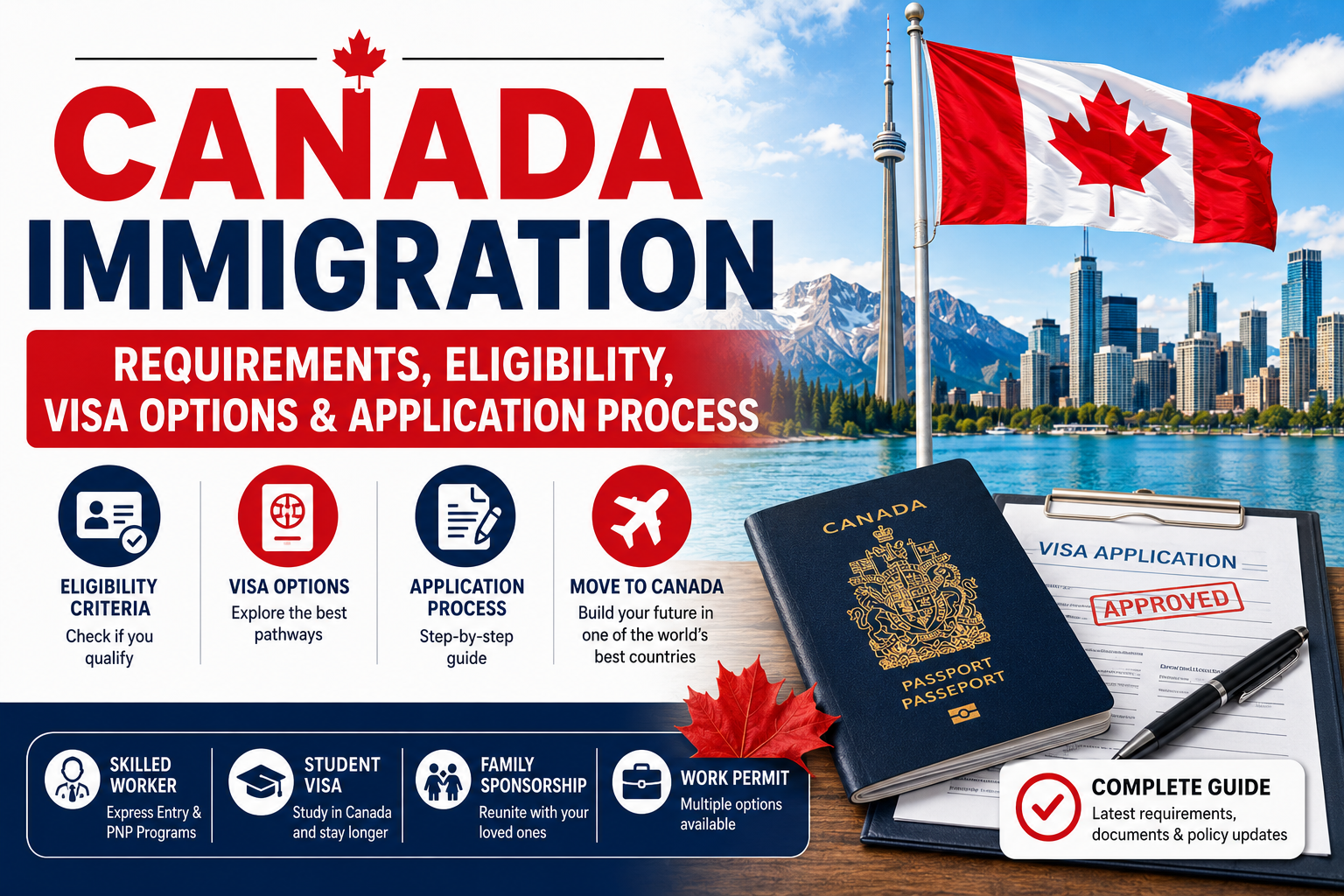
How to Get Permanent Residency in Canada as Permanent residency (PR) is one of the most sought-after immigration statuses for people who want to live, work, or study abroad without immediately becoming citizens. Countries such as Canada, Australia, New Zealand, Germany, and several European nations offer permanent residence pathways for skilled workers, international graduates, entrepreneurs, and eligible family members. If you’re planning to build a long-term future overseas, understanding the eligibility requirements and application process is essential before you apply.
Suggestion: How to Apply for a Work Visa
Suggestion: Canada Immigration Requirements: Eligibility, Visa Options & Application Process
Permanent residence requirements vary by country and immigration program, but most governments evaluate applicants based on factors such as education, work experience, language ability, financial stability, health, and character. This article explains the common requirements, required documents, application process, and practical tips to help you prepare a stronger application.
What Is Permanent Residency?
Permanent residency allows foreign nationals to live in another country indefinitely without becoming citizens immediately. Permanent residents usually have the legal right to:
- Live permanently in the country
- Work for eligible employers
- Study without requiring a separate student visa in many cases
- Access certain public services depending on local laws
- Sponsor eligible family members in some immigration programs
- Apply for citizenship after meeting residency requirements
Unlike temporary visas, permanent residency provides long-term stability, although permanent residents must continue to meet residency obligations and immigration laws.
Permanent Residency Eligibility Checker
Before starting an application, review these common requirements.
✔ Valid passport
✔ Educational qualifications
✔ Skilled work experience
✔ English and/or local language proficiency (where required)
✔ Medical examination
✔ Police clearance certificate
✔ Financial evidence or settlement funds (if applicable)
✔ Genuine intention to settle
✔ Meet the immigration requirements of your chosen country
Meeting these general criteria does not guarantee approval, but it provides a good indication that you may qualify for one or more permanent residence pathways.
Common Permanent Residency Pathways
Different countries offer different immigration programs.
Skilled Worker Programs
Many countries prioritize professionals with qualifications in occupations experiencing labour shortages.
Common industries include:
- Healthcare
- Engineering
- Information Technology
- Construction
- Skilled Trades
- Education
- Finance
Applicants are often assessed using a points-based immigration system.
Employer-Sponsored Permanent Residency
Some employers sponsor qualified foreign workers for permanent residence after demonstrating the need to fill positions with international talent.
Employer-sponsored pathways are common in:
- Canada
- Australia
- Germany
- New Zealand
Family Sponsorship
Permanent residents and citizens in many countries can sponsor eligible family members, including:
- Spouses
- Dependent children
- Parents
- Certain other relatives depending on local immigration rules
Business and Investment Immigration
Entrepreneurs and investors may qualify through programs designed to encourage business development and economic investment.
These programs usually require:
- Business ownership experience
- Minimum investment amounts
- Job creation
- Financial documentation
Required Documents
The exact documentation varies depending on the country and immigration pathway.
Commonly requested documents include:
- Valid passport
- Birth certificate
- Educational certificates
- Educational Credential Assessment (where applicable)
- Employment reference letters
- Language test results
- Police clearance certificates
- Medical examination reports
- Marriage certificate (if applicable)
- Children’s birth certificates
- Proof of settlement funds
- Resume or Curriculum Vitae (CV)
Always consult the official immigration authority before submitting your application.
Province Comparison (Canada Example)
For applicants considering Canada, choosing the right province can improve immigration opportunities.
| Province | Strong Industries | Cost of Living | Popular PR Pathways |
|---|---|---|---|
| Ontario | Finance, Technology, Healthcare | High | Express Entry, Ontario PNP |
| British Columbia | Technology, Tourism | High | BC Provincial Nominee Program |
| Alberta | Energy, Engineering | Moderate | Alberta Advantage Immigration Program |
| Saskatchewan | Agriculture, Skilled Trades | Lower | Saskatchewan Immigrant Nominee Program |
| Manitoba | Manufacturing, Logistics | Lower | Manitoba Provincial Nominee Program |
| Nova Scotia | Healthcare, Education | Moderate | Nova Scotia Nominee Program |
Research provincial labour market needs before choosing where to settle.
Step-by-Step Permanent Residency Application Process
Step 1: Choose the Right Immigration Program
Select the pathway that matches your qualifications, work experience, and long-term goals.
Step 2: Confirm Eligibility
Carefully review official eligibility requirements before preparing your documents.
Step 3: Complete Required Language Tests
Many immigration programs require approved English or French language test results.
Step 4: Gather Supporting Documents
Ensure all required documents are accurate, complete, and translated where necessary.
Step 5: Submit Your Application
Applications are submitted through the official immigration portal or designated government system.
Step 6: Complete Biometrics and Medical Examination
Many applicants must provide fingerprints, photographs, and complete a medical examination.
Step 7: Wait for Processing
Processing times vary depending on:
- Country
- Immigration program
- Application volume
- Background checks
- Document completeness
Recent Permanent Residency Policy Trends
Immigration policies continue to evolve as countries respond to labour shortages and demographic needs.
Recent trends include:
- Increased invitations for healthcare professionals
- Greater demand for skilled trades
- More regional immigration pathways
- Enhanced employer-sponsored programs
- Digital application systems
- Faster processing for selected occupations in some countries
Applicants should always review the latest policy announcements before applying.
Tips to Improve Your Chances
While no application can guarantee approval, these strategies may strengthen your profile.
- Improve your language test scores.
- Gain additional skilled work experience.
- Complete further education or professional certification.
- Ensure your documents are complete and accurate.
- Monitor regional immigration programs.
- Submit truthful and consistent information.
Preparation is often one of the biggest factors contributing to a smooth application process.
Common Mistakes to Avoid
Many applicants experience delays because they:
- Submit incomplete applications.
- Use outdated immigration forms.
- Miss document deadlines.
- Provide inconsistent information.
- Fail to meet language requirements.
- Ignore settlement fund requirements.
Review every document carefully before submission.
Why Trust Our Immigration Content?
Our articles are based on publicly available information from official immigration authorities and are written to help readers understand immigration systems in a clear and practical way.
We focus on:
- Accurate educational content
- Official government guidance
- Regular policy updates
- Transparent explanations
- Responsible immigration information
We do not guarantee visa approval or immigration success.
Frequently Asked Questions
What is permanent residency?
Permanent residency is an immigration status that allows eligible foreign nationals to live and work permanently in another country without immediately becoming citizens.
Which countries offer permanent residency?
Many countries, including Canada, Australia, Germany, New Zealand, and several European nations, offer permanent residence pathways for eligible applicants.
Can I apply for permanent residency without a job offer?
Yes. Some immigration programs do not require a job offer, although employment may improve your eligibility depending on the country and pathway.
What documents are required for permanent residency?
Typical documents include a valid passport, education records, employment history, language test results, police clearance, medical examination, and financial documents where applicable.
Does permanent residency lead to citizenship?
In many countries, permanent residents may become eligible to apply for citizenship after meeting residency requirements and other legal conditions.
Related Articles
- Canada Immigration Requirements: Eligibility, Visa Options & Application Process
- How to Apply for a Work Visa
- How to Apply for a Student Visa
- Dependent Visa Requirements: Who Can Apply and How to Get Approved
- Best Countries With Easy Tourist Visa Approval
- How to Find Cheap International Flights
Authoritative Resources
- Immigration, Refugees and Citizenship Canada (IRCC): https://www.canada.ca/en/services/immigration-citizenship.html
- U.S. Citizenship and Immigration Services (USCIS): https://www.uscis.gov
- UK Visas and Immigration (UKVI): https://www.gov.uk/browse/visas-immigration
- Australian Department of Home Affairs: https://immi.homeaffairs.gov.au
Disclaimer: Immigration requirements, processing times, and eligibility criteria change periodically. This article is for educational purposes only and does not constitute legal or immigration advice. Always verify current requirements with the official immigration authority of the country where you intend to apply before submitting your application.