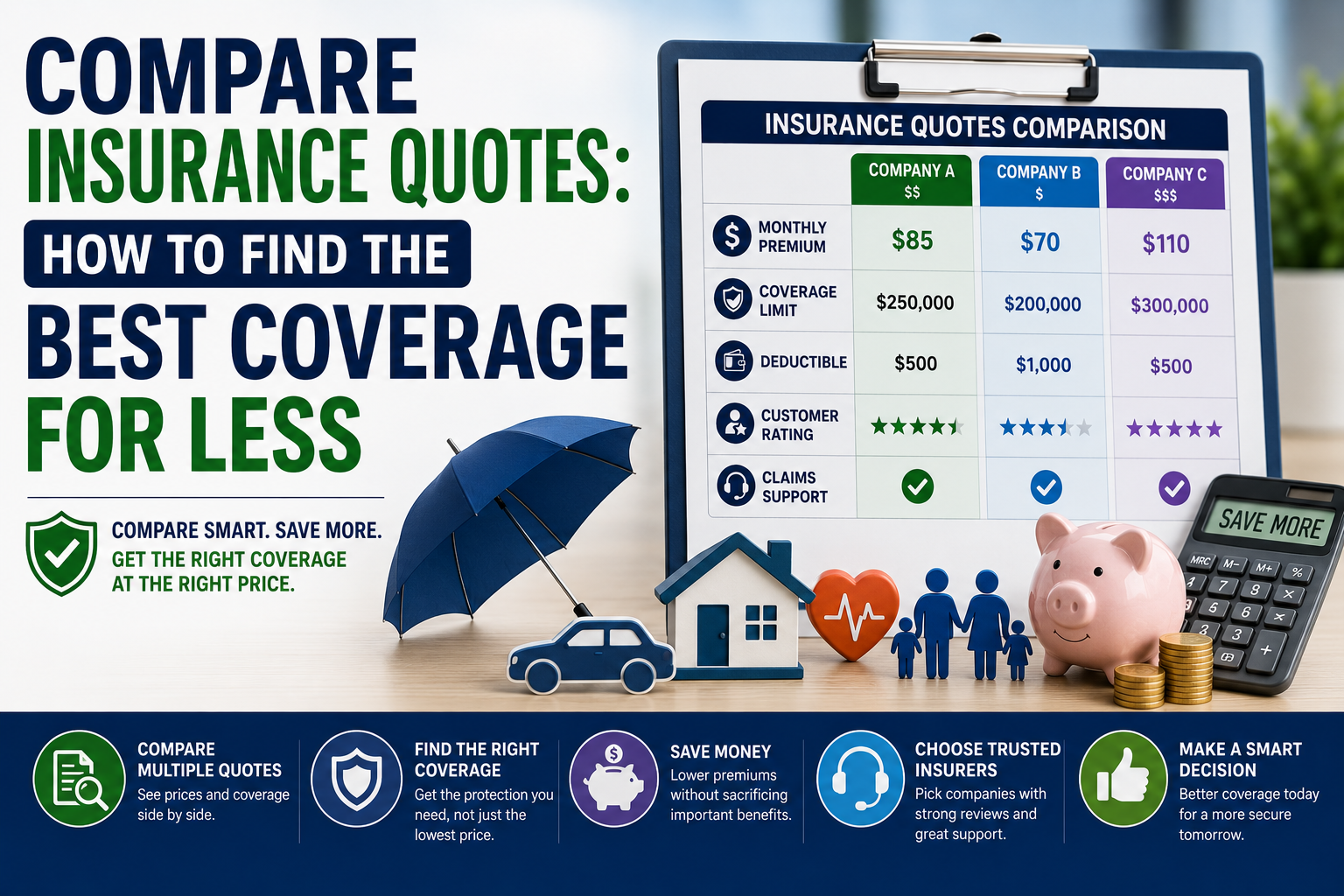
Compare Insurance Quotes | How to Find the Best Coverage for Less as shopping for insurance can feel confusing when every company promises affordable prices and excellent coverage. The truth is that the cheapest quote isn’t always the best deal, and the most expensive policy isn’t necessarily the best either. Comparing insurance quotes helps you find the right balance between cost and protection. Whether you’re looking for health, life, travel, home, or auto insurance, taking the time to compare multiple policies can save you money while ensuring you get the coverage you actually need.
Read our How to Choose the Best Health Insurance Plan for Your Needs to learn what benefits matter most before comparing health insurance quotes.
Why You Should Compare Insurance Quotes
Insurance companies calculate premiums differently. Two insurers may offer the same type of coverage but charge very different prices based on their underwriting process, risk assessment, discounts, and policy features.
Comparing quotes helps you:
- Find competitive prices
- Identify better coverage options
- Avoid paying for unnecessary extras
- Understand policy differences
- Discover available discounts
- Choose an insurer with a strong reputation
Spending a little extra time comparing policies today can lead to significant savings over the life of your insurance.
How Can You Compare Insurance Quotes?
To compare insurance quotes effectively, request quotes from several reputable insurers, review coverage limits, deductibles, exclusions, customer reviews, and claims support. Compare the overall value of each policy—not just the premium—to find the best coverage for your budget.
Start by Knowing What You Need
Before requesting quotes, define the type of insurance you’re looking for.
Ask yourself:
- What do I want to protect?
- How much coverage do I need?
- What’s my monthly budget?
- Do I need optional add-ons?
- Am I willing to pay a higher deductible to lower my premium?
Having clear answers makes it easier to compare policies fairly.
Compare the Coverage, Not Just the Price
One of the biggest mistakes people make is choosing the lowest quote without reviewing what’s included.
A lower premium may also mean:
- Lower coverage limits
- Higher deductibles
- More exclusions
- Fewer policy benefits
- Limited customer support
Always compare what you’re getting for the price, not just the cost itself.
Review Coverage Limits
Coverage limits determine the maximum amount your insurer will pay for a covered claim.
For example:
- Health insurance may have annual benefit limits.
- Travel insurance may limit emergency medical coverage.
- Auto insurance includes liability limits.
- Home insurance specifies rebuilding or replacement limits.
- Life insurance provides a fixed death benefit.
Make sure the policy offers enough protection for your financial situation.
Understand Deductibles
A deductible is the amount you pay before your insurance begins covering eligible costs.
Generally:
- Higher deductibles often reduce your premium.
- Lower deductibles usually increase your monthly payment.
Choose a deductible that fits your budget if you ever need to make a claim.
Read the Policy Exclusions
Every insurance policy has exclusions.
These explain situations where your insurer won’t pay a claim.
Common exclusions may include:
- Intentional damage
- Fraudulent claims
- Cosmetic procedures (health insurance)
- High-risk sports (travel insurance)
- Wear and tear (home insurance)
- Undisclosed medical conditions
Reading these exclusions before purchasing helps prevent unpleasant surprises later.
Read our How to Choose the Best Life Insurance Policy for Your Family to learn how to compare long-term financial protection for your loved ones.
Compare the Insurance Company’s Reputation
Price isn’t the only factor that matters.
Research each insurer’s:
Customer Reviews
Read verified customer experiences to understand how the company handles claims and customer support.
Claims Process
A good insurer should have a straightforward and efficient claims process.
Look for companies with online claims tracking and responsive customer service.
Financial Strength
Insurance is a long-term promise.
Choose financially stable insurers with strong ratings from recognized agencies whenever possible.
Ask About Discounts
Many insurance companies offer discounts that aren’t always advertised.
You may qualify for savings if you:
- Bundle multiple policies
- Pay annually instead of monthly
- Maintain a claims-free history
- Install home security devices
- Drive safely (for auto insurance)
- Purchase coverage online
Always ask which discounts are available before buying a policy.
Compare Optional Benefits
Some insurers offer valuable extras that increase the overall value of the policy.
Depending on the type of insurance, these may include:
- Roadside assistance
- Critical illness benefits
- Accidental death cover
- Rental car reimbursement
- Identity theft protection
- Emergency travel assistance
Compare these benefits carefully to determine whether they’re worth the additional cost.
Avoid Common Comparison Mistakes
Many people rush the process and miss important details.
Avoid these common mistakes:
- Comparing only monthly premiums
- Ignoring deductibles
- Overlooking exclusions
- Not reading customer reviews
- Choosing insufficient coverage
- Forgetting to ask about discounts
- Buying the first quote you receive
Taking time to compare policies thoroughly usually leads to better financial protection.
Use Trusted Comparison Tools
Online insurance comparison websites can simplify the process by allowing you to compare multiple insurers in one place.
However, don’t rely solely on comparison tools.
Visit insurers’ official websites, read policy documents, and contact customer support if you have questions about coverage or exclusions.
Review Your Insurance Every Year
Your insurance needs change over time.
Review your policies annually or after major life events such as:
- Marriage
- Buying a home
- Having children
- Changing jobs
- Starting a business
- Retirement
Comparing quotes regularly helps ensure you’re still receiving competitive pricing and appropriate coverage.
Frequently Asked Questions
Why should I compare insurance quotes?
Comparing insurance quotes helps you find better coverage, lower premiums, and policies that match your needs. Different insurers calculate premiums differently, so prices and benefits can vary significantly.
Is the cheapest insurance quote always the best?
No. The lowest-priced policy may provide less coverage, higher deductibles, or more exclusions. Compare the overall value rather than focusing only on price.
How many insurance quotes should I compare?
It’s generally a good idea to compare at least three to five quotes from reputable insurance companies before making a decision.
Can I switch insurance companies if I find a better quote?
Yes. In many cases, you can switch insurers when your policy renews or according to the cancellation terms of your existing policy. Review any fees or notice requirements before making the change.
What information do I need to compare insurance quotes?
You’ll typically need details such as your age, location, coverage requirements, property or vehicle information (if applicable), travel plans, or health information, depending on the type of insurance you’re purchasing.
UEE Final Advice
Comparing insurance quotes is one of the easiest ways to save money while securing better protection. Instead of choosing the first or cheapest policy you find, take time to compare coverage limits, deductibles, exclusions, customer service, and the insurer’s reputation. A little research today can help you avoid expensive surprises tomorrow and ensure you have the right coverage when you need it most.
UEE Resources
- National Association of Insurance Commissioners (NAIC): https://content.naic.org/
- Consumer Reports – Insurance Advice: https://www.consumerreports.org/
- MoneyHelper (UK): https://www.moneyhelper.org.uk/
- Financial Consumer Agency of Canada (FCAC): https://www.canada.ca/en/financial-consumer-agency.html