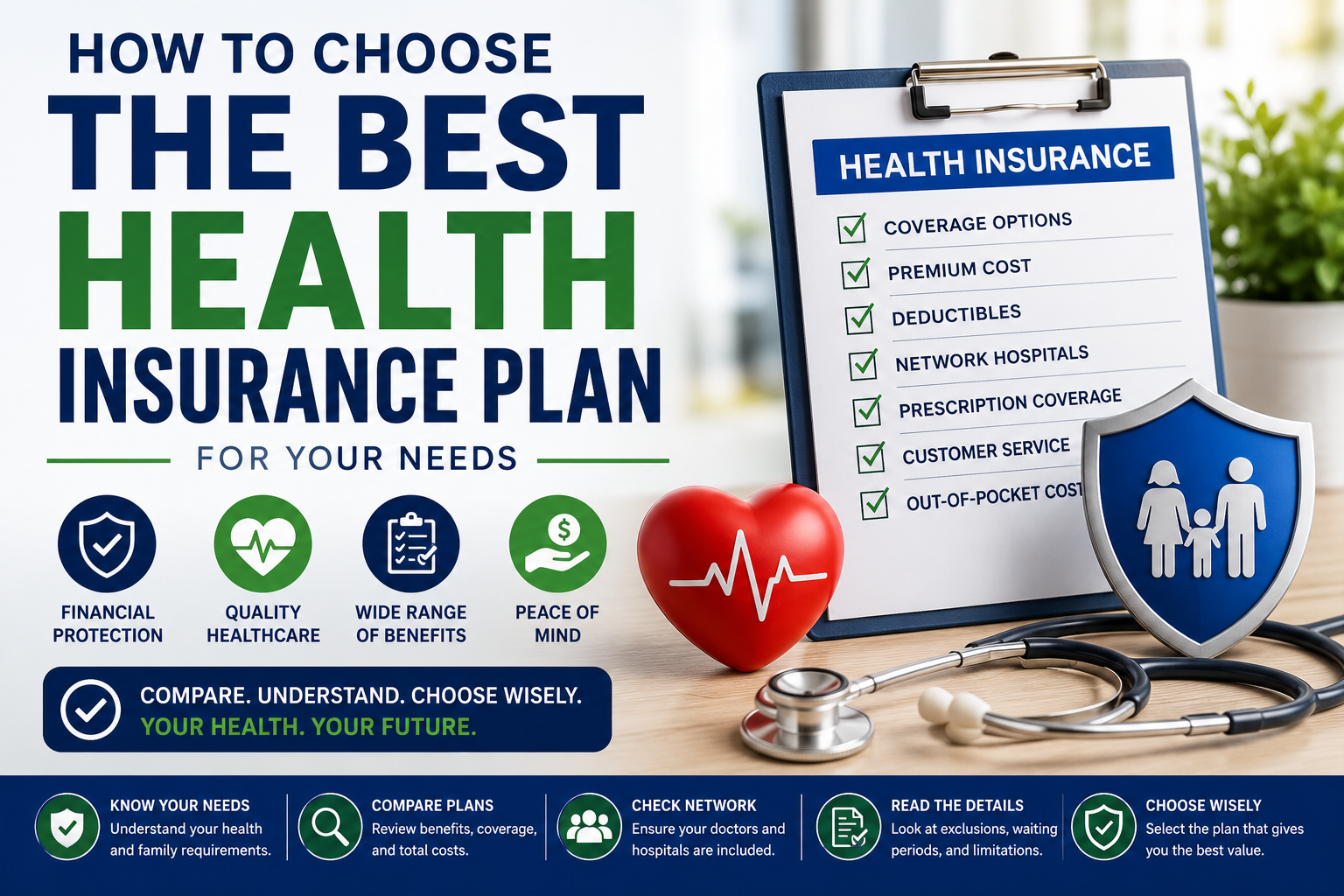
How to Choose the Best Health Insurance Plan for Your Needs as choosing a health insurance plan can feel overwhelming, especially when you’re faced with unfamiliar terms, different coverage levels, and varying monthly costs. The good news is that finding the right plan doesn’t have to be complicated. By understanding your healthcare needs, comparing coverage instead of just price, and reviewing policy details carefully, you can choose a health insurance plan that protects both your health and your finances. Whether you’re buying insurance for yourself, your family, or preparing for retirement, this article explains what to look for before making a decision.
Read our What Is Health Insurance and How Does It Work? article to understand the basics before comparing health insurance plans.
Why Choosing the Right Health Insurance Matters
Health insurance helps cover the cost of medical care, reducing the amount you pay out of pocket when you need healthcare services. Without adequate insurance, even routine medical treatment or an unexpected hospital stay can become financially challenging.
A good health insurance plan can help cover:
- Doctor visits
- Specialist consultations
- Hospitalization
- Emergency medical care
- Prescription medications
- Laboratory tests
- Preventive healthcare
- Maternity care (depending on the plan)
- Mental health services (where included)
The right policy provides peace of mind by helping you manage healthcare expenses before they become overwhelming.
How Do You Choose the Best Health Insurance Plan?
Choose the best health insurance plan by comparing coverage, monthly premiums, deductibles, provider networks, prescription drug benefits, annual out-of-pocket limits, and customer service. Select a plan that matches your healthcare needs and budget rather than choosing the lowest-priced option.
Start by Understanding Your Healthcare Needs
Before comparing plans, think about how often you use healthcare services.
Ask yourself:
- Do you visit the doctor regularly?
- Do you take prescription medications?
- Do you have ongoing medical conditions?
- Are you planning to start a family?
- Do you expect to need specialist care?
Answering these questions helps you choose coverage that fits your lifestyle instead of paying for benefits you may never use.
Compare More Than the Monthly Premium
Many people focus only on the monthly premium, but that’s only one part of the overall cost.
A lower premium may come with:
- Higher deductibles
- Larger co-payments
- Higher coinsurance
- Limited provider networks
Sometimes paying a slightly higher premium results in lower healthcare costs throughout the year.
Understand Key Health Insurance Terms
Knowing a few basic insurance terms makes comparing plans much easier.
Premium
The premium is the amount you pay each month to keep your health insurance active.
Deductible
A deductible is the amount you pay for covered healthcare services before your insurance starts sharing the costs.
Plans with lower premiums often have higher deductibles.
Co-payment
A co-payment (or co-pay) is a fixed amount you pay for certain medical services, such as visiting a doctor or filling a prescription.
Coinsurance
Coinsurance is the percentage of healthcare costs you share with your insurance company after meeting your deductible.
Out-of-Pocket Maximum
This is the maximum amount you’ll pay for covered healthcare services during a policy year. Once you reach this limit, your insurer typically covers eligible expenses for the remainder of the year.
Understanding these terms helps you compare policies more accurately.
Check What’s Included in the Coverage
Not every health insurance policy provides the same benefits.
Look for plans that include:
Hospital Care
Coverage for inpatient treatment, surgery, and overnight hospital stays.
Outpatient Services
Doctor visits, specialist appointments, and diagnostic testing.
Emergency Medical Care
Protection for unexpected illnesses or injuries requiring urgent treatment.
Prescription Drug Coverage
If you take regular medications, check that your prescriptions are included under the plan.
Preventive Care
Many health insurance plans cover preventive services such as health screenings, vaccinations, and annual checkups.
Review the Provider Network
Most insurers work with specific hospitals, clinics, and healthcare professionals.
Before choosing a plan, confirm that:
- Your preferred doctor participates in the network.
- Nearby hospitals accept the insurance.
- Specialist care is easily accessible.
Using in-network providers often reduces your healthcare costs.
Read our How to Choose the Best Travel Insurance for Your Trip if you also need medical protection while traveling internationally.
Consider Your Family’s Needs
If you’re buying insurance for your family, compare plans based on everyone’s healthcare requirements.
You may need additional benefits such as:
- Pediatric care
- Maternity coverage
- Vaccinations
- Mental health support
- Dental and vision care (where available)
Family plans can often provide better value than purchasing separate individual policies.
Don’t Ignore the Exclusions
Every health insurance policy has exclusions.
Common exclusions may include:
- Cosmetic procedures
- Experimental treatments
- Non-medically necessary services
- Certain alternative therapies
- Waiting periods for specific conditions
Reading the policy carefully helps prevent unexpected surprises when making a claim.
Compare Customer Service and Claims Support
A low-cost policy may not offer the best experience if customer support is poor.
Before choosing a provider, research:
- Customer reviews
- Claims processing times
- Complaint resolution
- Mobile app availability
- Online account management
- Customer support hours
Reliable customer service can make a significant difference when you need assistance.
Balance Cost with Value
The cheapest health insurance plan isn’t always the best choice.
Instead of focusing only on price, compare:
- Coverage limits
- Benefits included
- Deductibles
- Provider network
- Prescription drug coverage
- Customer satisfaction
- Financial strength of the insurer
A policy that costs slightly more each month may save you substantially on medical expenses over time.
Common Mistakes to Avoid
Many people make the same mistakes when buying health insurance.
Avoid these common errors:
- Choosing a plan based only on the monthly premium
- Ignoring deductibles and co-payments
- Not checking provider networks
- Overlooking prescription drug coverage
- Skipping the policy exclusions
- Buying more coverage than you actually need
- Waiting until you urgently need medical care
Taking time to compare plans carefully can help you avoid unnecessary expenses.
Frequently Asked Questions
What is the most important thing to look for in a health insurance plan?
The most important factors are coverage, deductibles, provider networks, prescription drug benefits, annual out-of-pocket limits, and total healthcare costs—not just the monthly premium.
Is the cheapest health insurance plan always the best?
No. Lower-cost plans often have higher deductibles, fewer benefits, or smaller provider networks. Compare the total value before making your decision.
How do I know if my doctor accepts a health insurance plan?
Most insurance companies publish a list of participating healthcare providers on their website. You can also contact your doctor’s office to confirm.
Can I change my health insurance plan later?
This depends on your country’s healthcare system and the insurer’s rules. In many cases, changes can be made during open enrollment periods or after qualifying life events.
How much health insurance coverage do I need?
The right amount depends on your age, health condition, family size, healthcare usage, and budget. Choose a plan that provides adequate protection for both routine and unexpected medical expenses.
UEE Final Advice
Choosing the best health insurance plan is about finding the right balance between affordability and protection. Take time to understand your healthcare needs, compare benefits instead of focusing only on premiums, and review policy details carefully before making a decision. A well-chosen health insurance plan can provide access to quality healthcare, reduce unexpected medical costs, and give you confidence that you’re financially prepared for whatever life brings.
UEE Resources
- World Health Organization (WHO): https://www.who.int/
- U.S. Department of Health & Human Services: https://www.hhs.gov/
- National Health Service (NHS) UK: https://www.nhs.uk/
- Government of Canada – Health: https://www.canada.ca/en/health-canada.html