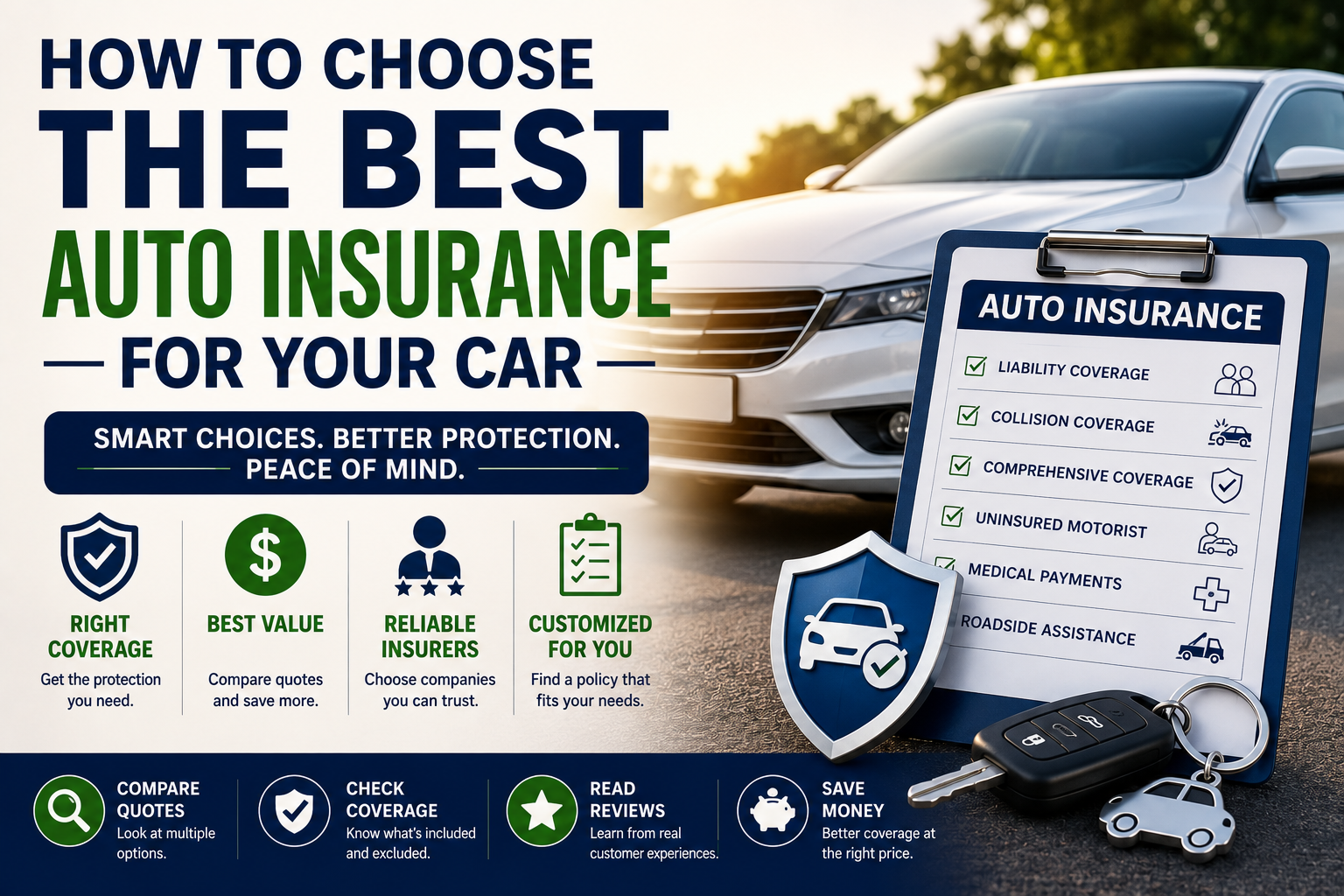
How to Choose the Best Auto Insurance for Your Car as buying auto insurance isn’t just about meeting legal requirements—it’s about protecting yourself, your passengers, your vehicle, and your finances. Whether you’ve just bought your first car or you’re thinking about switching insurance companies, choosing the right policy can save you money and prevent costly surprises after an accident. With so many insurers offering different prices and coverage options, knowing what to compare can make all the difference. This article explains how to choose the best auto insurance for your car without paying for coverage you don’t need.
Read our Compare Insurance Quotes: How to Find the Best Coverage for Less to learn how to compare insurers and get better value before buying an auto insurance policy.
Why Auto Insurance Is Important
Auto insurance protects you financially if your vehicle is involved in an accident, stolen, damaged, or causes injury to someone else. In many countries, carrying at least a minimum level of auto insurance is required by law.
Beyond legal compliance, the right policy can help you avoid paying thousands of dollars out of pocket after an unexpected incident.
Depending on your policy, auto insurance may cover:
- Damage to your vehicle
- Damage to another person’s vehicle or property
- Medical expenses after an accident
- Theft or vandalism
- Fire and natural disasters
- Legal liability
- Uninsured or underinsured drivers
- Roadside assistance
The best policy is one that gives you the protection you need at a price you can comfortably afford.
How Do You Choose the Best Auto Insurance?
To choose the best auto insurance, compare coverage options, liability limits, deductibles, customer reviews, discounts, and claims service. Don’t choose a policy based only on price. The right auto insurance should provide enough protection for your vehicle, your finances, and your driving habits.
Understand the Different Types of Auto Insurance Coverage
Before comparing quotes, it’s important to understand what each type of coverage does.
Liability Coverage
Liability insurance pays for injuries or property damage you cause to other people if you’re responsible for an accident.
In many countries, this is the minimum coverage required by law.
Collision Coverage
Collision insurance pays for repairs to your own vehicle after an accident, regardless of who caused it.
This is especially valuable if your car is newer or has a high market value.
Comprehensive Coverage
Comprehensive insurance covers damage that isn’t caused by a collision.
Examples include:
- Theft
- Fire
- Flooding
- Storm damage
- Falling objects
- Vandalism
If you want broader protection, comprehensive coverage is worth considering.
Personal Injury Protection or Medical Payments
Depending on your country or insurer, this coverage helps pay medical expenses for you and your passengers after an accident.
Uninsured and Underinsured Motorist Coverage
Not every driver carries enough insurance.
This coverage helps protect you if you’re involved in an accident with someone who has little or no insurance.
Decide How Much Coverage You Need
The amount of coverage you need depends on several factors.
Consider:
- Your car’s value
- Your budget
- Where you drive
- How often you drive
- Local insurance requirements
- Your financial situation
If replacing your vehicle would be difficult financially, higher coverage limits may provide valuable peace of mind.
Compare More Than Just the Premium
It’s natural to look for the cheapest quote, but price should never be the only deciding factor.
When comparing policies, review:
- Coverage limits
- Deductibles
- Exclusions
- Optional benefits
- Claims process
- Customer satisfaction ratings
Sometimes a slightly higher premium provides much stronger protection.
Choose a Deductible That Fits Your Budget
A deductible is the amount you pay before your insurance company contributes to a covered claim.
Generally:
- Higher deductibles lower your monthly premium.
- Lower deductibles increase your premium but reduce your costs after an accident.
Choose an amount you could realistically afford if you needed to file a claim.
Read our How to Choose the Best Travel Insurance for Your Trip if you also want financial protection when driving or renting a vehicle abroad.
Ask About Available Discounts
Many drivers qualify for discounts without realizing it.
Common discounts include:
- Safe driver discounts
- Multi-policy discounts
- Multi-vehicle discounts
- Good student discounts
- Defensive driving course discounts
- Low-mileage discounts
- Paying annually instead of monthly
Always ask your insurer which discounts you’re eligible for before purchasing a policy.
Check the Insurance Company’s Reputation
Price is important, but service matters too.
Research each insurer by reviewing:
Customer Reviews
Read recent customer feedback to understand how the company handles claims and customer support.
Claims Process
A reliable insurer should make filing and tracking claims simple and efficient.
Financial Strength
Choose insurers with strong financial ratings and a history of paying claims promptly.
Reliable claims service is one of the most valuable features of any insurance policy.
Read the Policy Exclusions
Every auto insurance policy contains exclusions.
These explain situations where coverage may not apply.
Common exclusions include:
- Intentional damage
- Racing or competitive driving
- Driving under the influence
- Unauthorized drivers
- Normal wear and tear
- Mechanical breakdowns
Understanding these exclusions helps prevent surprises if you ever need to make a claim.
Review Your Policy Every Year
Your insurance needs can change over time.
Review your policy annually or after major life events such as:
- Buying a new vehicle
- Moving to a different location
- Adding another driver
- Driving fewer miles
- Getting married
Regular reviews help ensure you’re still receiving competitive pricing and appropriate coverage.
Common Mistakes to Avoid
Avoid these common auto insurance mistakes:
- Choosing the cheapest policy without comparing coverage
- Buying only the minimum required coverage when more protection is needed
- Ignoring deductibles
- Forgetting to ask about discounts
- Not reviewing exclusions
- Failing to compare multiple insurers
- Letting your policy renew automatically without checking better options
Taking time to compare policies carefully can help you save money while improving your protection.
Frequently Asked Questions
What is the best type of auto insurance?
The best auto insurance depends on your vehicle, budget, driving habits, and financial situation. Many drivers choose a combination of liability, collision, and comprehensive coverage for broader protection.
Is the cheapest auto insurance always the best?
No. A lower premium may come with reduced coverage, higher deductibles, or limited benefits. Compare the overall value of each policy before making a decision.
How often should I compare auto insurance quotes?
It’s a good idea to compare quotes at least once a year or whenever your policy is due for renewal. You should also compare rates after buying a new car or experiencing major life changes.
What factors affect auto insurance premiums?
Insurance companies consider factors such as your age, driving history, vehicle type, location, annual mileage, coverage limits, and claims history when calculating premiums.
Can I switch auto insurance companies at any time?
In many cases, yes. However, check your current policy for cancellation terms or fees before switching to another insurer.
UEE Final Advice
Choosing the best auto insurance is about finding the right balance between affordability and protection. Instead of focusing only on the lowest premium, compare coverage options, deductibles, insurer reputation, discounts, and claims support. A well-chosen policy can protect your finances, reduce stress after an accident, and give you confidence every time you get behind the wheel.
UEE Resources
- National Highway Traffic Safety Administration (NHTSA): https://www.nhtsa.gov/
- National Association of Insurance Commissioners (NAIC): https://content.naic.org/
- MoneyHelper (UK): https://www.moneyhelper.org.uk/
- Financial Consumer Agency of Canada (FCAC): https://www.canada.ca/en/financial-consumer-agency.html