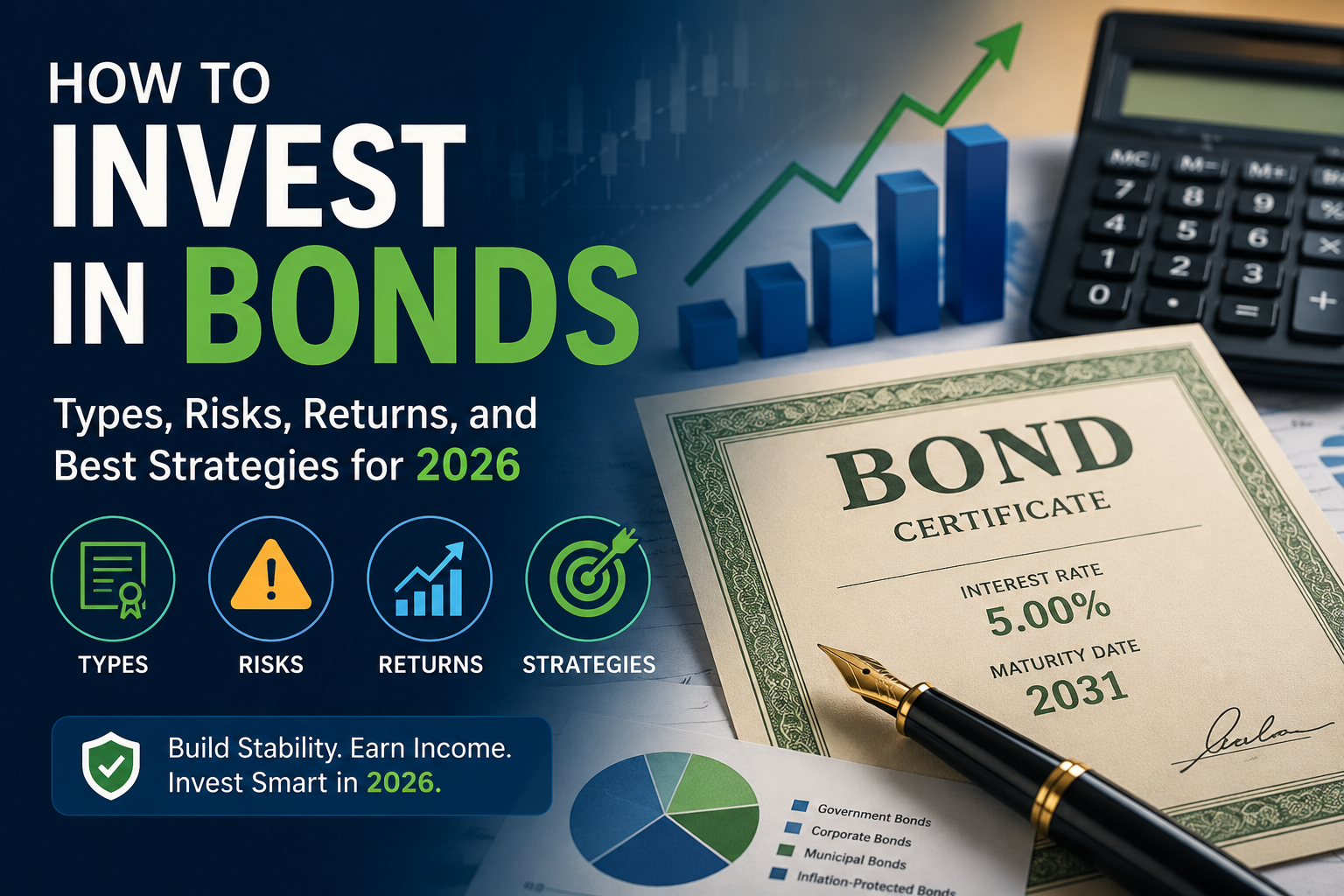
How Government Bonds Work for Beginners, as government bonds are among the safest investment options available, making them a popular choice for beginners, retirees, and conservative investors. While they may not offer the highest returns compared to stocks, they provide stability, predictable income, and lower risk. Understanding how government bonds work can help you make informed investment decisions and build a stronger financial future. Whether you’re investing from the United States, the United Kingdom, Canada, Australia, or another country, the basic principles of government bonds remain largely the same. This beginner-friendly guide explains everything you need to know before investing.
Read our guide on Treasury Bills in Nigeria: How They Work, Current Interest Rates, and How to Invest to understand another popular government-backed investment option.
You may also like How to Build a Diversified Investment Portfolio for Long-Term Wealth to learn how government bonds fit into a balanced investment strategy.
What Are Government Bonds?
Answer:
Government bonds are debt securities issued by a national government to raise money for public spending. When you buy a government bond, you are lending money to the government in exchange for regular interest payments and the return of your original investment when the bond reaches maturity.
Governments issue bonds to finance projects such as infrastructure, healthcare, education, defense, and other public services.
For investors, bonds offer a relatively safe way to earn steady income while preserving capital.
How Do Government Bonds Work?
Government bonds follow a simple process.
- The government issues bonds to investors.
- Investors purchase the bonds.
- The government pays interest, known as the coupon payment, at regular intervals.
- At the maturity date, the investor receives the original investment (principal) back.
For example, if you purchase a government bond worth $5,000 with a 4% annual coupon rate for 10 years, you’ll receive regular interest payments each year and your $5,000 principal at maturity.
Why Governments Issue Bonds
Governments borrow money through bonds instead of raising taxes immediately.
The funds may be used for:
- Building roads and bridges
- Funding hospitals and schools
- Supporting economic recovery
- Refinancing existing debt
- Investing in public infrastructure
- National development projects
Because governments generally have strong repayment ability, their bonds are considered lower-risk investments.
Key Features of Government Bonds
Understanding the basic characteristics of government bonds makes investing much easier.
Face Value
The face value is the amount the government promises to repay when the bond matures.
For example:
- $1,000
- £1,000
- CAD 1,000
- AUD 1,000
Coupon Rate
The coupon rate is the annual interest paid to investors.
A bond with a 5% coupon pays:
- $50 annually on a $1,000 bond.
Maturity Date
This is when the government repays the original investment.
Government bonds commonly mature in:
- 2 years
- 5 years
- 10 years
- 20 years
- 30 years
Longer maturities generally offer higher yields because investors commit their money for a longer period.
Types of Government Bonds
Different governments issue various types of bonds depending on investor needs.
Short-Term Government Securities
These mature within one year and often include Treasury Bills.
They usually don’t pay periodic interest but are sold at a discount and redeemed at full face value.
Medium-Term Bonds
These generally mature between two and ten years.
They pay regular interest and are suitable for investors seeking income.
Long-Term Bonds
These mature after ten years.
Long-term bonds often provide higher yields but are more sensitive to changes in interest rates.
Inflation-Protected Bonds
Some governments issue bonds that adjust with inflation.
These help preserve purchasing power over time.
Examples include:
- Treasury Inflation-Protected Securities (TIPS) in the United States
- Index-linked government securities in several countries
Benefits of Investing in Government Bonds
Government bonds offer several advantages for beginner investors.
Low Investment Risk
Government bonds are generally considered one of the safest investments because they are backed by national governments.
Although no investment is completely risk-free, default risk is usually very low in developed economies.
Predictable Income
Regular coupon payments provide consistent cash flow.
Many retirees and income-focused investors appreciate this reliability.
Portfolio Diversification
Bonds often perform differently from stocks.
Including bonds in your investment portfolio can reduce overall investment volatility.
Capital Preservation
Unlike many higher-risk investments, government bonds prioritize protecting your principal investment if held until maturity.
Risks of Government Bonds
Even safe investments have risks.
Interest Rate Risk
When interest rates rise, existing bond prices usually fall.
If you sell before maturity, you could receive less than you originally invested.
Inflation Risk
If inflation exceeds your bond’s interest rate, your purchasing power may decline.
Inflation-protected bonds help reduce this risk.
Opportunity Cost
Government bonds may produce lower returns than stocks over long investment periods.
Investors seeking higher growth often balance bonds with equities.
How Beginners Can Invest in Government Bonds
There are several ways to get started.
Buy Directly from the Government
Many governments sell bonds directly through official treasury programs.
This often eliminates intermediary fees.
Use a Brokerage Account
Most online investment platforms allow investors to purchase government bonds.
You can also buy existing bonds on the secondary market.
Invest Through Bond Funds
Bond mutual funds and exchange-traded funds (ETFs) provide instant diversification.
Instead of owning one bond, you own a portfolio managed by professionals.
Are Government Bonds Better Than Savings Accounts?
Both have advantages.
Savings accounts provide immediate access to cash.
Government bonds generally offer:
- Higher potential returns
- Fixed interest payments
- Longer investment periods
If you don’t need immediate access to your money, bonds may generate better long-term income.
How Government Bonds Fit into Your Investment Portfolio
Financial experts often recommend diversification.
A balanced portfolio might include:
- Stocks for long-term growth
- Government bonds for stability
- Cash savings for emergencies
- Other investments depending on financial goals
The exact allocation depends on your age, income, investment horizon, and risk tolerance.
Common Mistakes Beginners Should Avoid
Many first-time investors make avoidable errors.
Ignoring Inflation
Always compare bond yields with current inflation rates.
Selling Too Early
Selling before maturity may result in losses if interest rates have increased.
Investing Without Diversification
Avoid placing all your money into one investment type.
Diversification helps reduce overall portfolio risk.
Focusing Only on Yield
Higher yields may reflect greater risk.
Always consider the credit quality and financial strength of the issuing government.
Conclusion
Government bonds remain one of the best investment options for beginners who value stability, predictable income, and lower risk. While they may not deliver the rapid growth of stocks, they play an important role in preserving wealth and reducing overall portfolio volatility.
Understanding how government bonds work allows you to make informed financial decisions, diversify your investments, and build long-term financial security. Whether you’re saving for retirement, generating passive income, or balancing a broader investment portfolio, government bonds deserve consideration.
Frequently Asked Questions
What is a government bond?
A government bond is a loan made by investors to a national government in exchange for regular interest payments and repayment of the original investment at maturity.
Are government bonds safe?
Government bonds are generally considered among the safest investments because they are backed by the issuing government. However, they still carry risks such as inflation and interest rate changes.
How do beginners buy government bonds?
Beginners can purchase government bonds directly from government treasury programs, through brokerage accounts, or by investing in bond mutual funds and ETFs.
Can you lose money investing in government bonds?
If held until maturity, investors typically receive their principal back, assuming the government does not default. However, selling before maturity may result in gains or losses depending on market conditions.
Are government bonds better than stocks?
Government bonds generally offer lower risk and lower returns than stocks. Many investors own both as part of a diversified portfolio.
UEE Resources
- U.S. Department of the Treasury (TreasuryDirect): https://www.treasurydirect.gov/
- MoneyHelper (UK): https://www.moneyhelper.org.uk/
- Financial Consumer Agency of Canada (FCAC): https://www.canada.ca/en/financial-consumer-agency.html
- Moneysmart (Australia): https://moneysmart.gov.au/