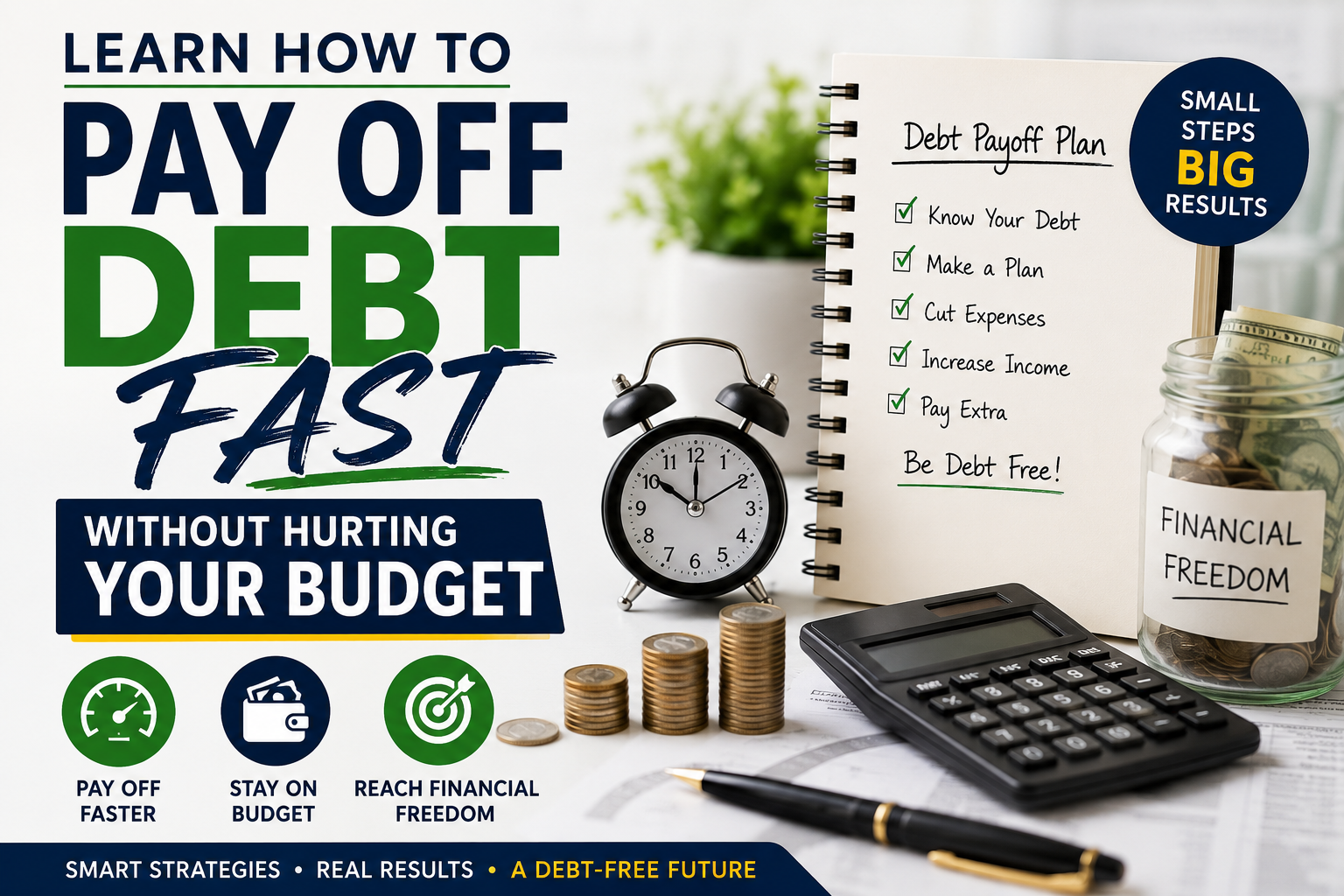
Learn How to Pay Off Debt Fast Without Hurting Your Budget as Debt can feel overwhelming, but paying it off doesn’t have to mean giving up everything you enjoy. The key is to use a realistic strategy that fits your income, expenses, and financial goals. Whether you’re paying off credit cards, personal loans, medical bills, or other debts, you can make meaningful progress without destroying your monthly budget. UEE guide explains practical, proven methods to pay off debt faster while maintaining financial stability. You’ll also learn how to avoid common mistakes that slow down debt repayment.
Read our guide on How to Create a Monthly Budget That Actually Works to build a stronger financial foundation before accelerating your debt payoff.
You may also enjoy Best Ways to Build an Emergency Fund on a Low Income to avoid relying on debt in the future.
How Can You Pay Off Debt Fast Without Hurting Your Budget?
The fastest way to pay off debt without straining your finances is to create a realistic budget, prioritize high-interest debt, reduce unnecessary expenses, increase your income where possible, and make consistent extra payments—even if they’re small. The goal is steady progress rather than unsustainable sacrifices.
Why Paying Off Debt Matters
Debt affects more than your bank account. High balances can increase financial stress, reduce your ability to save, and limit opportunities like buying a home or investing for retirement.
Paying off debt offers several benefits:
- Lower monthly financial pressure
- Improved credit health
- More money available for savings and investments
- Greater financial security
- Reduced interest costs over time
The sooner you begin, the less interest you’ll pay in the long run.
Understand Exactly What You Owe
Before creating a repayment strategy, list every debt you have.
Include:
- Current balance
- Interest rate
- Minimum monthly payment
- Due date
- Remaining repayment term
Seeing everything in one place helps you decide where your money will have the greatest impact.
Create a Budget That Supports Debt Repayment
A successful budget should help you pay off debt while still covering essential living expenses.
Divide your spending into three categories:
Essential Expenses
These include:
- Housing
- Utilities
- Transportation
- Insurance
- Groceries
- Healthcare
These expenses should remain your priority.
Financial Goals
Set aside money for:
- Minimum debt payments
- Emergency savings
- Retirement contributions when possible
Maintaining even a small emergency fund prevents new debt from unexpected expenses.
Flexible Spending
Review spending on:
- Dining out
- Entertainment
- Streaming subscriptions
- Shopping
- Travel
Small reductions across several categories often free up significant money without making life miserable.
Choose the Best Debt Repayment Method
Two popular strategies consistently help borrowers stay motivated.
Debt Avalanche Method
Pay extra toward the debt with the highest interest rate while making minimum payments on the others.
Advantages include:
- Lowest total interest paid
- Faster long-term savings
- Financially efficient
This method works well for people focused on minimizing borrowing costs.
Debt Snowball Method
Pay off your smallest balance first regardless of interest rate.
Benefits include:
- Quick wins
- Increased motivation
- Easier habit building
Many people stick with this approach because early success builds confidence.
Increase Payments Without Breaking Your Budget
You don’t need hundreds of extra dollars each month.
Instead, look for manageable opportunities:
Round Up Your Payments
Instead of paying $185, pay $200.
Those small increases can shorten repayment significantly.
Make Biweekly Payments
Splitting your monthly payment into two payments every two weeks often results in one extra monthly payment each year.
This helps reduce both interest and repayment time.
Use Unexpected Income
Apply extra money such as:
- Tax refunds
- Bonuses
- Cash gifts
- Freelance income
- Cashback rewards
Since these funds aren’t part of your regular budget, they won’t affect your normal monthly spending.
Cut Expenses Strategically
Avoid extreme budgeting that becomes impossible to maintain.
Instead, identify expenses that provide little value.
Examples include:
- Unused subscriptions
- Frequent food delivery
- Impulse online shopping
- Expensive phone plans
- High insurance premiums
Review recurring charges every few months to ensure you’re only paying for services you actually use.
Increase Your Income
Growing your income can often accelerate debt repayment more effectively than endless cost-cutting.
Ideas include:
Freelancing
Offer skills such as:
- Writing
- Graphic design
- Programming
- Marketing
- Virtual assistance
Sell Unused Items
Many households have unused electronics, furniture, clothing, or sporting equipment that can generate quick cash.
Ask for Additional Hours
If available, overtime or additional shifts can significantly increase monthly debt payments.
Start a Side Business
Even a modest side income can shorten repayment by months or even years.
Avoid Taking on New Debt
One of the biggest obstacles to paying off debt is continuing to borrow while trying to repay existing balances.
To prevent this:
- Avoid impulse purchases
- Delay non-essential spending
- Use cash or debit whenever possible
- Build an emergency fund
- Remove stored payment information from shopping websites
Creating small barriers often reduces unnecessary spending.
Track Your Progress
Monitoring your progress keeps motivation high.
Each month:
- Update your remaining balances
- Celebrate milestones
- Review your budget
- Adjust repayment goals if your income changes
Even slow progress is still progress.
Common Debt Payoff Mistakes
Many borrowers unintentionally delay becoming debt-free.
Avoid these common mistakes:
Paying Only Minimum Payments
Minimum payments often extend repayment for years because much of the payment goes toward interest.
Ignoring High Interest Rates
High-interest debt grows quickly if left unpaid.
Prioritize these balances whenever possible.
Closing Old Credit Accounts Immediately
If you’re working to improve your credit score, consider whether keeping older accounts open may benefit your credit history, provided you can manage them responsibly.
Not Having an Emergency Fund
Unexpected expenses often force people back into debt.
Even saving a small emergency cushion can prevent financial setbacks.
Build Long-Term Financial Habits
Becoming debt-free is only part of financial success.
Once your debt is paid off:
- Continue budgeting
- Increase savings
- Invest consistently
- Review financial goals annually
- Avoid lifestyle inflation when income increases
Healthy money habits help ensure you stay debt-free for years to come.
Conclusion
Learning how to pay off debt fast without hurting your budget is about consistency rather than perfection. By creating a realistic budget, choosing an effective repayment strategy, reducing unnecessary expenses, increasing income when possible, and avoiding new debt, you can steadily eliminate what you owe while maintaining financial stability.
The most effective debt repayment plan is one you can follow month after month. Small improvements made consistently often produce the biggest long-term results.
Frequently Asked Questions
How can I pay off debt faster with a low income?
Focus on creating a realistic budget, reducing unnecessary spending, making small extra payments whenever possible, and increasing your income through part-time work or freelancing.
Should I save money or pay off debt first?
It’s generally wise to build a small emergency fund while making debt payments. This helps prevent new borrowing when unexpected expenses occur.
Which debt should I pay off first?
Many financial experts recommend paying off the highest-interest debt first because it reduces total interest costs. Others prefer paying the smallest balance first for motivational wins.
Does paying off debt improve my credit score?
Yes. Consistently making payments and reducing outstanding balances can improve your credit profile over time, although results vary depending on your overall credit history.
Is it worth consolidating debt?
Debt consolidation may simplify repayments and lower interest costs if you qualify for better terms. However, compare fees, interest rates, and repayment periods before deciding.
UEE Resources
- Consumer Financial Protection Bureau (CFPB): Budgeting, debt management, and consumer finance education.
- MoneyHelper (UK): Free guidance on managing debt and improving financial wellbeing.
- Financial Consumer Agency of Canada (FCAC): Resources on budgeting, credit, and debt repayment.
- Moneysmart (Australia): Government-backed advice on paying off debt and building healthy financial habits.