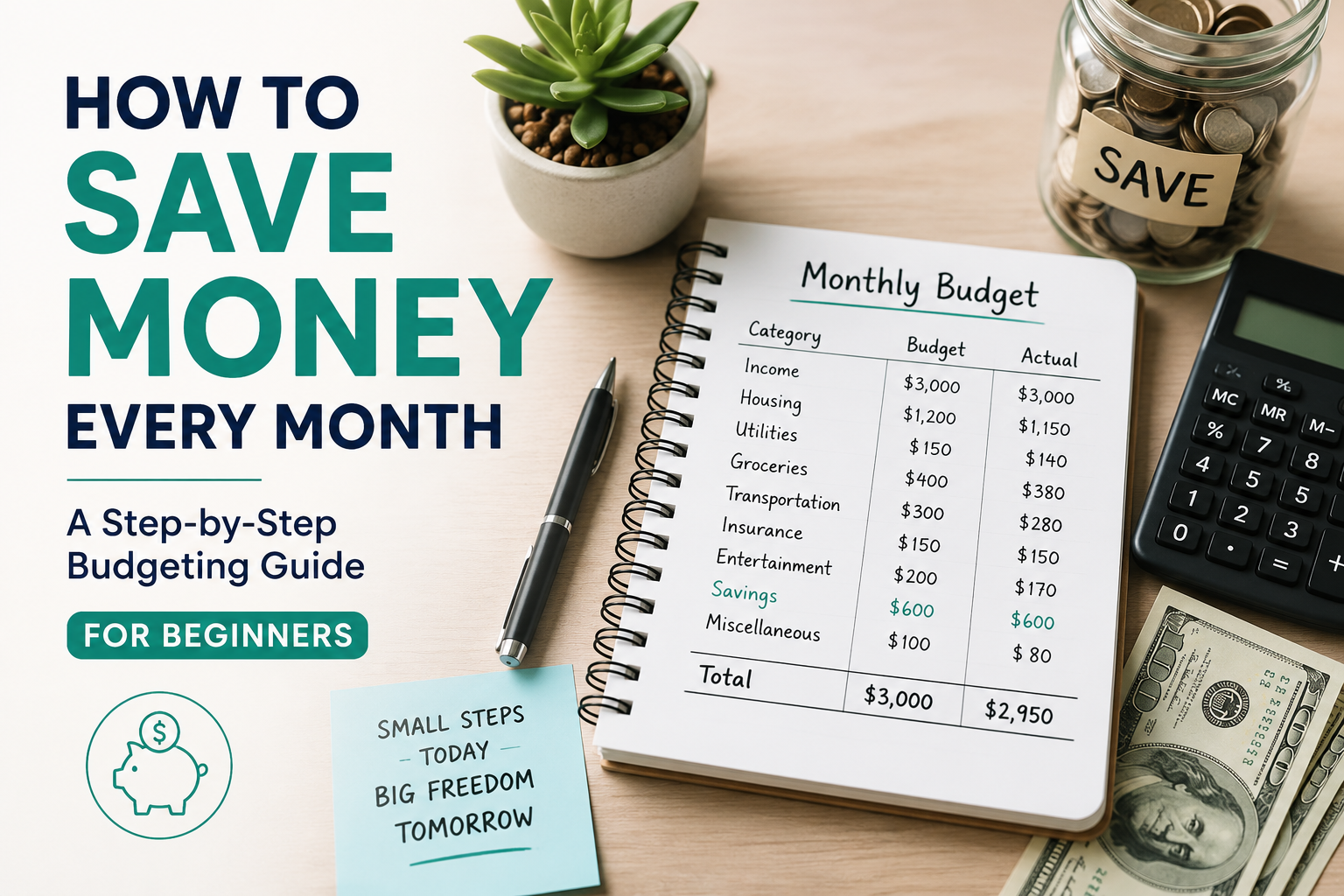
How to Save Money Every Month | A Step-by-Step Budgeting Guide for Beginners as saving money every month doesn’t require earning a six-figure salary. The real secret is creating a realistic budget, tracking your spending, and developing financial habits that work for your lifestyle. Whether you’re trying to pay off debt, build an emergency fund, or save for a house, a simple budgeting system can help you reach your financial goals faster.
Let UEE friendly guide explains exactly how to save money every month, even if you’ve struggled with budgeting in the past.
Why Saving Money Every Month Matters
Saving consistently provides financial security and reduces the stress that comes from living paycheck to paycheck. Even small monthly contributions grow significantly over time thanks to disciplined saving and compound growth.
Some of the biggest benefits include:
- Better financial stability
- Less dependence on credit cards
- Emergency preparedness
- More freedom to achieve life goals
- Reduced financial stress
- Greater long-term wealth
The most successful savers aren’t necessarily the highest earners—they’re simply consistent.
- Begin Here: Read our guide on How to Build an Emergency Fund From Scratch.
- Related: Learn 50/30/20 Budget Rule Explained for Beginners before creating your monthly budget.
How Can Beginners Save Money Every Month?
If you’re new to budgeting, follow these simple steps:
- Calculate your monthly income.
- Track every expense.
- Separate needs from wants.
- Create a realistic monthly budget.
- Set an automatic savings goal.
- Reduce unnecessary spending.
- Review your budget every month and adjust as needed.
Following these steps consistently can help almost anyone build healthy saving habits.
Know Exactly How Much Money You Earn
Before creating a budget, determine your total monthly take-home income after taxes.
Include:
- Salary
- Freelance income
- Side hustle earnings
- Government benefits (if applicable)
- Passive income
Only budget using income you can reliably expect each month.
Step 2: Track Every Dollar You Spend
Many people underestimate how much they actually spend.
Review the last 2–3 months of:
- Bank statements
- Credit card transactions
- Mobile payment apps
- Cash purchases
Record every expense.
This exercise often reveals unnecessary spending that can easily become monthly savings.
Categorize Your Expenses
Separate spending into categories such as:
Essential Expenses
- Rent or mortgage
- Utilities
- Groceries
- Insurance
- Transportation
- Healthcare
Non-Essential Expenses
- Streaming services
- Dining out
- Coffee shops
- Shopping
- Entertainment
- Subscription apps
Understanding where your money goes makes budgeting much easier.
Step 3: Set Clear Savings Goals
People save more successfully when they know exactly what they’re saving for.
Examples include:
Short-Term Goals
- Emergency fund
- Holiday travel
- New laptop
- Car repairs
Long-Term Goals
- Home deposit
- Retirement
- Children’s education
- Financial independence
Assign a target amount and deadline for every goal.
Step 4: Create a Simple Monthly Budget
Your budget should tell your money where to go before the month begins.
One beginner-friendly method is the 50/30/20 budget.
- 50% for needs
- 30% for wants
- 20% for savings and debt repayment
Don’t worry if your numbers aren’t perfect initially. The goal is consistency, not perfection.
Example Monthly Budget
| Category | Percentage |
|---|---|
| Housing & Bills | 35% |
| Food | 15% |
| Transportation | 10% |
| Entertainment | 10% |
| Savings | 20% |
| Miscellaneous | 10% |
Adjust percentages based on your personal circumstances.
Step 5: Pay Yourself First
One of the most effective saving strategies is paying yourself before spending.
As soon as your salary arrives:
- Transfer money into savings.
- Leave only your budgeted spending money.
- Avoid touching savings unless it’s a genuine emergency.
Automation removes temptation.
Step 6: Cut Unnecessary Monthly Expenses
Small recurring expenses can quietly drain your finances.
Look for opportunities to reduce:
Subscription Services
Cancel platforms you rarely use.
Dining Out
Cooking at home several nights each week can save hundreds annually.
Energy Bills
Turn off unused appliances and use energy-efficient lighting.
Shopping
Delay impulse purchases for 24 hours before buying.
Many people discover they can save hundreds each month without feeling deprived.
Step 7: Build an Emergency Fund
Unexpected expenses happen.
Car repairs.
Medical bills.
Job loss.
Home maintenance.
An emergency fund prevents these situations from becoming financial disasters.
Aim to save:
- $500 initially
- Then one month’s expenses
- Eventually three to six months of living costs
Building it gradually is perfectly acceptable.
Step 8: Avoid Lifestyle Inflation
As income increases, spending often rises just as quickly.
Instead:
- Increase savings first.
- Invest extra income.
- Pay off debt faster.
- Keep living expenses stable whenever possible.
This habit accelerates long-term wealth building.
Step 9: Review Your Budget Every Month
A budget isn’t something you create once and forget.
Every month:
- Compare planned spending with actual spending.
- Identify overspending.
- Adjust categories.
- Increase savings whenever possible.
Budgeting improves with practice.
Common Budgeting Mistakes Beginners Make
Avoid these common pitfalls:
- Setting unrealistic budgets
- Forgetting annual expenses
- Ignoring small daily purchases
- Not tracking spending
- Using credit cards without a repayment plan
- Giving up after one bad month
Remember, one mistake doesn’t ruin your progress.
Money-Saving Habits That Actually Work
Successful savers often share these habits:
- Shop with a grocery list.
- Compare prices before buying.
- Buy quality items that last longer.
- Use cashback and reward programs responsibly.
- Plan meals in advance.
- Avoid emotional spending.
- Save windfalls like tax refunds or bonuses.
Small habits repeated consistently create lasting financial success.
How Much Should You Save Each Month?
There’s no universal amount.
A good starting point is saving at least 20% of your monthly income, but even 5–10% is better than saving nothing.
Increase your savings rate whenever your income grows or expenses decrease.
Consistency matters more than the amount.
UEE Final Thoughts
Learning how to save money every month begins with understanding your finances and creating a realistic budget you can actually follow. Budgeting isn’t about restricting your life—it’s about giving every dollar a purpose and making informed financial decisions.
Start small, stay consistent, and review your progress regularly. Over time, those monthly savings can grow into a strong emergency fund, help eliminate debt, and provide the financial freedom to pursue your biggest goals.
The best budget is the one you can maintain month after month.
Frequently Asked Questions (FAQ)
How can I start saving money if I live paycheck to paycheck?
Start by tracking every expense, cutting unnecessary spending, and saving even a small amount each payday. Consistency is more important than the initial amount.
What is the easiest budgeting method for beginners?
The 50/30/20 budgeting rule is one of the simplest methods because it divides income into needs, wants, and savings.
How much money should I save every month?
Aim for at least 20% of your income if possible. If that’s not realistic, start with 5–10% and gradually increase your savings over time.
Should I pay off debt or save money first?
Ideally, build a small emergency fund first, then focus on paying high-interest debt while continuing to save consistently.
What’s the biggest mistake people make when budgeting?
Many people create unrealistic budgets and stop tracking their spending. A flexible, realistic budget is much easier to maintain.
UEE Resources
- Consumer budgeting guidance from the Consumer Financial Protection Bureau (CFPB).
- Personal finance education from MyMoney.gov.
- Budget planning resources from the MoneyHelper (UK).
- Financial literacy tools from the Financial Consumer Agency of Canada (FCAC).