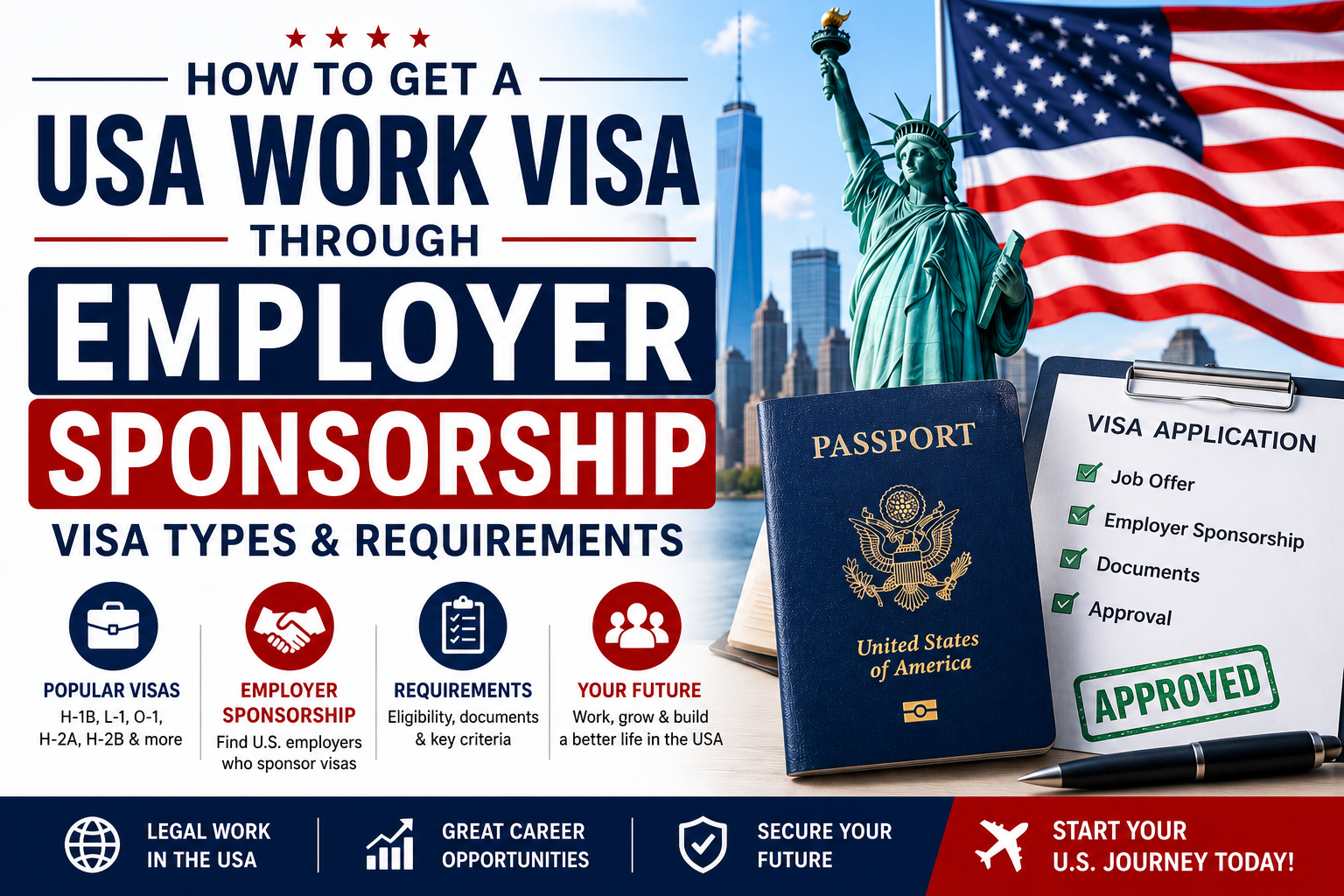
How to Get a USA Work Visa Through Employer Sponsorship: Visa Types & Requirements as Working in the United States is a dream for many skilled professionals, healthcare workers, engineers, IT specialists, and tradespeople around the world. While there are several ways to work legally in the U.S., one of the most common and reliable routes is through employer sponsorship. If a U.S. company cannot easily fill a position with qualified local workers, it may sponsor an eligible foreign national for a work visa or even permanent residence.
Understanding how employer sponsorship works before applying can help you choose the right visa category, prepare the necessary documents, and avoid common mistakes that delay applications.
Suggestion: How to Immigrate to the USA: Green Card, Work Visa & Immigration Process
Suggestion: USA Immigration Requirements: Visa Options, Eligibility & How to Apply
What Is Employer Sponsorship?
Employer sponsorship means a U.S. employer agrees to hire a foreign worker and supports their visa application by filing the required paperwork with U.S. immigration authorities. Depending on the visa category, the employer may also need to prove there are no qualified U.S. workers available for the role or meet other legal requirements.
Employer sponsorship is common in industries facing labour shortages, such as healthcare, information technology, engineering, construction, finance, manufacturing, and agriculture.
How to Get a USA Work Visa Through Employer Sponsorship
The basic steps to obtain a U.S. work visa through employer sponsorship are:
- Secure a job offer from a U.S. employer.
- Confirm the employer is willing to sponsor your visa.
- Meet the eligibility requirements for the visa category.
- Submit the required documents.
- Attend a visa interview if applicable.
- Receive approval before travelling to the United States.
Each visa category has different eligibility rules, processing times, and employer responsibilities.
Common Employer-Sponsored U.S. Work Visas
H-1B Visa
The H-1B visa is one of the most popular work visas for professionals in specialty occupations.
Typical occupations include:
- Software Developers
- Engineers
- Accountants
- Architects
- Data Scientists
- Financial Analysts
- IT Consultants
Applicants generally need a relevant university degree or equivalent professional experience.
L-1 Visa
The L-1 visa allows multinational companies to transfer managers, executives, or employees with specialised knowledge from overseas offices to the United States.
It is commonly used by international corporations expanding their U.S. operations.
O-1 Visa
The O-1 visa is designed for individuals who have demonstrated extraordinary ability in fields such as:
- Science
- Education
- Business
- Athletics
- Arts
- Entertainment
Applicants typically need substantial evidence of exceptional achievements.
H-2A Visa
The H-2A programme allows U.S. employers to hire temporary agricultural workers when domestic workers are unavailable.
H-2B Visa
The H-2B visa covers temporary non-agricultural jobs, including positions in:
- Hospitality
- Landscaping
- Construction
- Tourism
- Seafood processing
Employers must demonstrate a temporary labour need.
Eligibility Requirements
Although requirements vary by visa type, applicants generally need:
- A valid passport
- A genuine job offer
- Employer sponsorship
- Relevant education or experience
- Clean immigration history
- Ability to satisfy health and security requirements
Meeting the minimum eligibility criteria does not guarantee visa approval, as every application is reviewed individually.
Documents You’ll Typically Need
Preparing complete and accurate documentation is one of the best ways to reduce processing delays.
Common documents include:
Personal Documents
- Valid passport
- Passport-sized photographs
- Birth certificate
Employment Documents
- Job offer letter
- Employment contract
- Resume or CV
- Professional licences (if required)
- Educational certificates
Supporting Documents
- Previous employment records
- Reference letters
- Immigration forms
- Proof of qualifications
- Police certificates if requested
Always review the official document checklist for your specific visa category before applying.
Industries That Frequently Sponsor Foreign Workers
Several sectors in the United States regularly recruit international professionals because of ongoing workforce shortages.
| Industry | Common Positions |
|---|---|
| Healthcare | Registered Nurses, Physicians, Pharmacists |
| Technology | Software Engineers, Cybersecurity Specialists, Data Analysts |
| Engineering | Civil, Mechanical, Electrical Engineers |
| Construction | Project Managers, Electricians, Welders |
| Manufacturing | CNC Operators, Industrial Engineers |
| Logistics | Truck Drivers, Supply Chain Specialists |
| Finance | Accountants, Auditors |
| Hospitality | Hotel Managers, Chefs |
Demand varies depending on labour market conditions and employer hiring needs.
Well-Known Employers That Sponsor International Talent
Many recognised U.S. companies recruit skilled workers from around the world, depending on business needs and immigration eligibility.
Examples include:
- Amazon
- Microsoft
- Apple
- Meta
- IBM
- Oracle
- Intel
- Deloitte
- Accenture
- JPMorgan Chase
- Tesla
Sponsorship opportunities vary by role, qualifications, and current hiring priorities.
Tips to Improve Your Chances of Approval
A strong application begins long before your visa interview. Consider these practical tips:
Apply for Jobs That Clearly Offer Sponsorship
Many employers specify whether they sponsor work visas. Focus your search on positions that explicitly mention sponsorship or international hiring.
Tailor Your Resume
Highlight qualifications, certifications, and experience that match the employer’s requirements. A well-targeted resume improves your chances of securing an interview.
Keep Your Documents Organised
Ensure your passport, educational credentials, employment records, and supporting documents are current and readily available.
Be Honest Throughout the Process
Providing inaccurate or misleading information can lead to visa refusal and future immigration complications.
Frequently Asked Questions
Can any U.S. employer sponsor a work visa?
Not every employer sponsors foreign workers. Sponsorship depends on the company’s hiring needs, the visa category, and compliance with U.S. immigration laws.
Do I need a job offer before applying?
For most employer-sponsored work visas, yes. A genuine job offer is usually required before the employer can begin the sponsorship process.
Which U.S. work visa is the most common?
The H-1B visa is one of the most widely used visas for professionals in specialty occupations, though the appropriate visa depends on your qualifications and the nature of the job.
Can a work visa lead to a Green Card?
Some employer-sponsored workers may later become eligible for employment-based permanent residence, depending on the visa category and employer sponsorship.
How long does the process take?
Processing times vary based on the visa category, government workload, and the completeness of the application. Always check official U.S. immigration resources for current estimates.
UEE Thoughts
Employer sponsorship remains one of the most effective ways for qualified professionals to work legally in the United States. Whether you’re pursuing a career in healthcare, technology, engineering, finance, or skilled trades, understanding the available visa categories and preparing a complete application can improve your chances of success.
Take time to research employers that sponsor international workers, ensure your qualifications match the job requirements, and rely on official immigration information throughout the application process.
UEE Resources
- U.S. Citizenship and Immigration Services (USCIS): https://www.uscis.gov
- U.S. Department of State – U.S. Visas: https://travel.state.gov/content/travel/en/us-visas.html
- U.S. Department of Labor: https://www.dol.gov
- E-Verify Employer Search: https://www.e-verify.gov