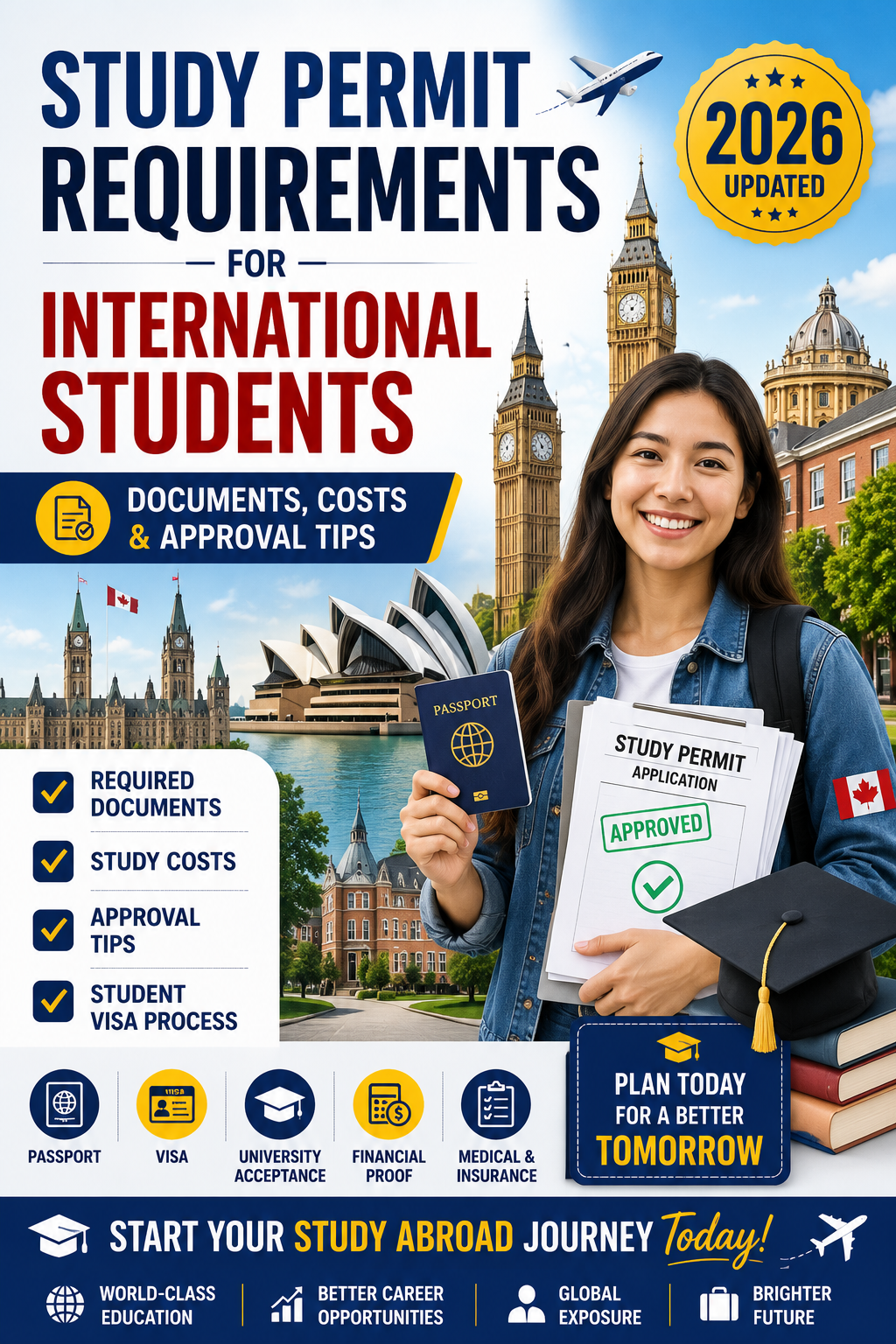
Study Permit Requirements for International Students: Documents, Costs & Approval Tips as Studying abroad is one of the biggest investments you can make in your future. Whether your goal is to earn an internationally recognized degree, improve your career prospects, or qualify for a post-graduation work permit, obtaining a study permit is one of the first and most important steps. Countries such as Canada, Australia, the United Kingdom, Germany, and the United States continue to attract millions of international students every year because of their world-class universities, multicultural environments, and strong employment opportunities after graduation.
Suggestion: How to Apply for a Student Visa: Step-by-Step Process for International Students
Suggestion: Canada Immigration Requirements: Eligibility, Visa Options & Application Process
Every country has its own study permit rules, but most immigration authorities evaluate applicants using similar criteria, including admission to an approved institution, proof of financial support, genuine study intentions, health requirements, and character checks. In this article, you’ll learn about the documents you’ll need, estimated costs, eligibility requirements, approval tips, and common mistakes to avoid before submitting your application.
Study Permit at a Glance
A study permit allows eligible international students to study at an approved educational institution in another country.
Most study permit applications require:
- A valid passport
- Letter of Acceptance (LOA) from an approved institution
- Proof of financial support
- Tuition payment evidence (where applicable)
- Medical examination (if required)
- Police clearance certificate (depending on the country)
- Genuine intention to study
- Compliance with immigration requirements
Receiving a study permit does not automatically guarantee entry into the country. Border officials may conduct additional checks upon arrival.
Study Permit Eligibility Checker
Before applying, ask yourself these questions:
✔ Have you been accepted into a recognized educational institution?
✔ Do you have a valid passport?
✔ Can you prove you have enough money for tuition and living expenses?
✔ Can you explain why you chose your course and destination?
✔ Are you prepared to leave the country if your permit expires and you do not qualify for another legal status?
✔ Can you meet health and character requirements?
If you answered “Yes” to most of these questions, you may be well-positioned to begin your study permit application.
Who Needs a Study Permit?
Most international students require a study permit before beginning full-time education abroad.
Common destinations include:
- Canada
- Australia
- United Kingdom
- United States
- Germany
- New Zealand
- Ireland
Each country has its own immigration rules, so always review the official government requirements before applying.
Documents Required for a Study Permit
Document requirements vary depending on your destination, but most applicants should prepare the following:
- Valid passport
- Letter of Acceptance from an approved institution
- Completed study permit application
- Passport-sized photographs
- Academic transcripts and certificates
- English language test results (IELTS, TOEFL, PTE, or equivalent, where required)
- Proof of tuition payment (if applicable)
- Proof of financial support
- Statement of Purpose (SOP) or study plan
- Medical examination results (where required)
- Police clearance certificate (where applicable)
- Birth certificate
- Marriage certificate (if applicable)
Documents that are not in the official language of your destination country may need certified translations.
Estimated Costs
The total cost of studying abroad extends beyond the study permit fee.
Typical expenses may include:
| Expense | Estimated Cost (USD Equivalent) |
|---|---|
| Study Permit Application | Varies by country |
| Passport | Country dependent |
| English Language Test | $150–$350 |
| Medical Examination | $100–$400 |
| Biometrics | Varies |
| Tuition Deposit | Institution dependent |
| Health Insurance | Country dependent |
| Airfare | Seasonal |
Actual costs vary depending on your destination, institution, and personal circumstances.
Popular Study Destinations Compared
Choosing the right destination depends on your budget, career goals, immigration opportunities, and preferred lifestyle.
| Country | Tuition Costs | Work While Studying | Post-Graduation Opportunities |
|---|---|---|---|
| Canada | Moderate | Yes (subject to current rules) | Strong |
| Australia | Moderate to High | Yes | Excellent |
| United Kingdom | Moderate to High | Yes | Graduate Route available for eligible students |
| Germany | Low to Moderate | Yes | Good opportunities for skilled graduates |
| United States | High | Limited under specific rules | Strong depending on program |
Always review the latest immigration regulations before making your final decision.
Why Immigration Officers Refuse Some Study Permit Applications
A refusal does not always mean the applicant lacks academic ability.
Common reasons include:
- Insufficient financial evidence
- Weak Statement of Purpose
- Incomplete documentation
- Doubts about genuine study intentions
- Inconsistent information
- Failure to meet health requirements
- Criminal inadmissibility where applicable
Preparing a complete and truthful application can significantly reduce avoidable delays and refusals.
Tips to Improve Your Approval Chances
Although no one can guarantee approval, there are practical steps that may strengthen your application.
Choose a Recognized Institution
Apply only to accredited colleges or universities recognized by the destination country’s education authorities.
Prepare a Strong Statement of Purpose
Clearly explain:
- Why you selected your course
- Why you chose that country
- How the program supports your career goals
- Why you intend to comply with immigration rules
A well-written study plan helps immigration officers understand your educational objectives.
Demonstrate Financial Stability
Provide clear evidence that you can cover:
- Tuition fees
- Accommodation
- Living expenses
- Transportation
- Emergency funds where applicable
Financial documentation should be genuine, complete, and easy to verify.
Submit Accurate Documents
Review every document carefully before submission.
Small errors can result in unnecessary delays.
Part-Time Work Opportunities for International Students
Many countries allow eligible international students to work while studying, subject to visa conditions and local laws.
Common student-friendly industries include:
| Occupation | Typical Employers |
|---|---|
| Retail Assistant | Supermarkets, shopping centres |
| Hospitality Staff | Hotels, cafés, restaurants |
| Customer Service Representative | Retail businesses |
| Administrative Assistant | Universities and private companies |
| Warehouse Associate | Logistics companies |
| Tutor | Educational institutions |
Students should always confirm the work rights attached to their specific study permit before accepting employment.
Employers That Frequently Hire International Students
Many well-known organizations recruit students for part-time or graduate roles, depending on local hiring needs and work authorization rules.
Examples include:
- Starbucks
- McDonald’s
- Marriott International
- Hilton Hotels
- Amazon
- Walmart
- Costco
- IKEA
- Accor Hotels
- Local universities and colleges
Hiring practices vary by country, and applicants should verify eligibility directly with each employer.
- Immigration, Refugees and Citizenship Canada (IRCC) – Study Permits
https://www.canada.ca/en/immigration-refugees-citizenship/services/study-canada/study-permit.html - Australian Department of Home Affairs – Student Visa (Subclass 500)
https://immi.homeaffairs.gov.au/visas/getting-a-visa/visa-listing/student-500