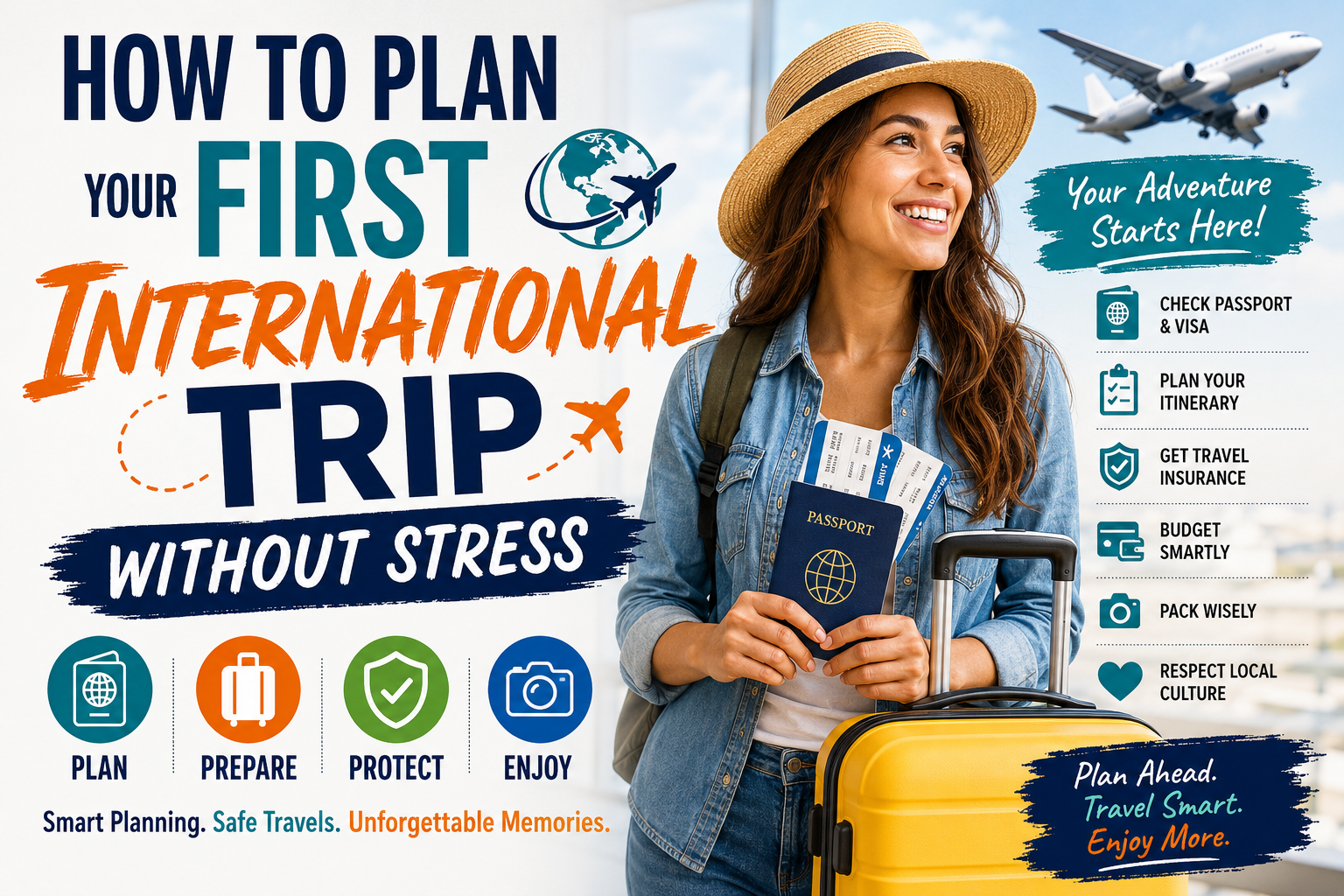
How to Plan Your First International Trip Without Stress, While Planning your first international trip is exciting, but it can also feel overwhelming. From booking flights and applying for a visa to choosing travel insurance and understanding local customs, there are many details to consider. The good news is that a little planning goes a long way. By organizing your trip step by step, you can avoid common mistakes, stay within your budget, and enjoy a smoother travel experience. Whether you’re traveling for a vacation, business, study, or to visit family, this guide will help you prepare with confidence.
Read our How to Choose the Best Travel Insurance for Your Trip before booking your flight to make sure you’re protected against unexpected travel emergencies.
Why Planning Ahead Makes Travel Easier
One of the biggest reasons first-time travelers experience stress is leaving important decisions until the last minute. Planning early gives you more time to compare prices, secure the right documents, and prepare for your destination.
Early planning can help you:
- Save money on flights and accommodation
- Apply for visas without rushing
- Purchase travel insurance
- Research your destination
- Create a realistic travel budget
- Avoid unnecessary travel delays
The more prepared you are before departure, the more enjoyable your trip is likely to be.
How Do You Plan Your First International Trip?
To plan your first international trip, choose your destination, check passport and visa requirements, create a travel budget, book flights and accommodation early, buy travel insurance, research local customs, pack wisely, and keep copies of important travel documents.
Choose the Right Destination
Start by selecting a destination that matches your interests, budget, and travel experience.
Consider factors such as:
- Safety
- Weather
- Language
- Flight availability
- Visa requirements
- Cost of living
- Local transportation
If it’s your first trip abroad, destinations with good tourist infrastructure and reliable public transport may make your experience more comfortable.
Check Your Passport and Visa Requirements
Before booking anything, confirm that your passport is valid for the required period. Many countries require passports to remain valid for at least six months beyond your planned travel dates.
Next, research whether you need:
- A tourist visa
- An electronic travel authorization (ETA)
- A visa on arrival
- Additional entry documents
Always rely on official government immigration websites for the latest entry requirements.
Create a Realistic Travel Budget
Your travel budget should include more than just airfare.
Remember to budget for:
- Flights
- Accommodation
- Meals
- Local transportation
- Travel insurance
- Visa fees
- Activities
- Shopping
- Emergency expenses
Setting aside an emergency fund can provide extra peace of mind during your trip.
Book Flights Early
Airfare often increases closer to departure.
Booking early gives you:
- Better prices
- More flight options
- Better seat selection
- Flexible schedules
Compare airlines and booking platforms before making your final decision.
Choose Accommodation Carefully
Your accommodation affects both comfort and convenience.
Compare options such as:
- Hotels
- Apartments
- Guesthouses
- Hostels
- Vacation rentals
When comparing properties, check:
- Guest reviews
- Location
- Public transportation access
- Safety
- Cancellation policies
- Included amenities
Sometimes paying slightly more for a central location can save money on transportation.
Buy Travel Insurance
Travel insurance is one of the most important purchases for international travel.
A good policy may help cover:
- Emergency medical expenses
- Trip cancellation
- Lost luggage
- Flight delays
- Emergency evacuation
- Personal liability
Compare policies carefully to ensure the coverage matches your destination and planned activities.
Read our Medical Insurance While Traveling: What It Covers & How to Choose the Best Plan if you’re comparing travel medical coverage before your departure.
Learn About Local Customs
Understanding local culture helps you avoid misunderstandings and shows respect for your destination.
Research topics such as:
- Greetings
- Dress codes
- Tipping customs
- Public behavior
- Local laws
- Religious practices
Even learning a few basic words in the local language can improve your travel experience.
Pack Smart, Not Heavy
Packing efficiently makes traveling much easier.
Bring:
- Travel documents
- Medications
- Chargers
- Comfortable clothing
- Weather-appropriate outfits
- Universal power adapter
- Copies of important documents
Avoid overpacking by choosing versatile clothing that can be mixed and matched.
Keep Digital and Printed Copies
Before leaving home, make copies of:
- Passport
- Visa
- Flight tickets
- Hotel reservations
- Travel insurance
- Emergency contacts
Store digital copies securely in cloud storage and keep printed copies separate from the originals.
Stay Connected While Abroad
Research your communication options before traveling.
You may choose:
- International roaming
- Local SIM cards
- eSIM services
- Portable Wi-Fi devices
Having reliable internet access helps with navigation, transportation, and emergency communication.
Prepare for Currency Exchange
Learn about the local currency before your trip.
Tips include:
- Inform your bank about your travel plans.
- Carry a small amount of local cash.
- Use credit or debit cards where accepted.
- Avoid exchanging large amounts at airports if rates are less favorable.
Understanding exchange rates can help you manage your spending more effectively.
Common Mistakes First-Time Travelers Should Avoid
Many travel problems can be prevented with good preparation.
Avoid these common mistakes:
- Booking flights before checking visa requirements
- Traveling without insurance
- Forgetting passport expiration dates
- Overpacking
- Ignoring local customs
- Not informing your bank about international travel
- Waiting until the last minute to prepare
Careful planning helps reduce stress and unexpected expenses.
Frequently Asked Questions
How far in advance should I plan my first international trip?
It’s generally recommended to start planning at least two to six months before departure, especially if you need a visa or plan to travel during peak seasons.
Do I need travel insurance for international travel?
While it may not always be legally required, travel insurance is highly recommended. It can help protect you from unexpected medical expenses, trip cancellations, lost luggage, and other travel disruptions.
What documents should I carry when traveling internationally?
Essential documents include your passport, visa (if required), travel insurance details, flight confirmations, accommodation reservations, and emergency contact information.
How much money should I budget for an international trip?
Your budget depends on your destination, travel style, and trip length. Include transportation, accommodation, meals, insurance, sightseeing, shopping, and emergency expenses in your planning.
What is the biggest mistake first-time international travelers make?
One of the most common mistakes is failing to research entry requirements, travel insurance, and local customs before departure. Proper preparation can prevent many travel-related problems.
UEE Final Advice
Your first international trip doesn’t have to be stressful. With thoughtful planning, realistic budgeting, and the right travel preparation, you can enjoy an unforgettable experience while avoiding many common travel mistakes. Start planning early, keep your documents organized, protect yourself with travel insurance, and stay flexible throughout your journey. The more prepared you are before leaving home, the more you’ll be able to focus on creating lasting memories.
UEE Resources
- U.S. Department of State – International Travel: https://travel.state.gov/
- Government of Canada – Travel Advice and Advisories: https://travel.gc.ca/
- UK Foreign, Commonwealth & Development Office – Travel Advice: https://www.gov.uk/foreign-travel-advice
- Australian Government – Smartraveller: https://www.smartraveller.gov.au/